Games
Treasure map hunt
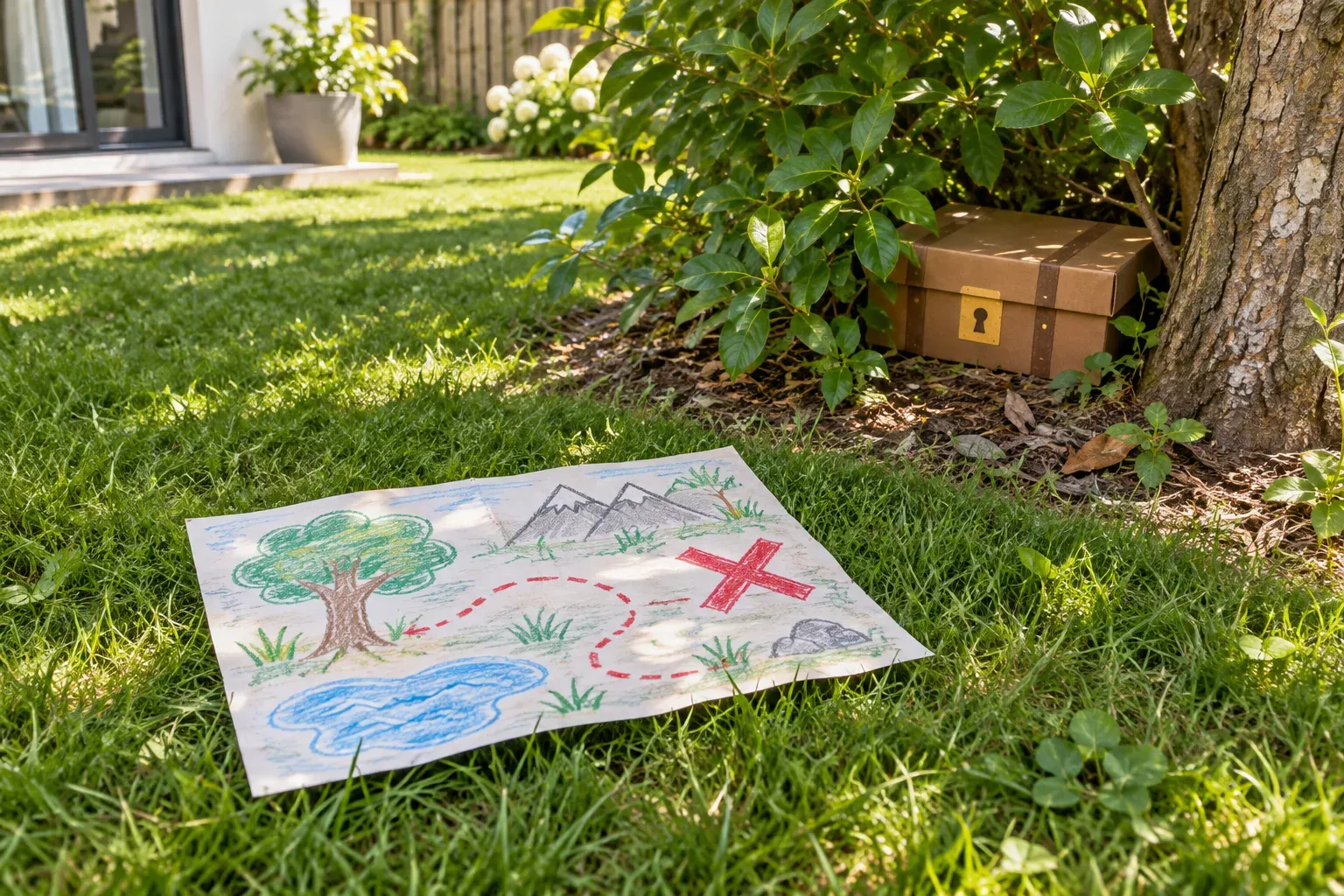
Draw a simple map of a room or yard, hide a treasure, and follow the pictured landmarks to the X.
- Age
- 4 to 6 years
- Play time
- 30 min
- Set-up
- 15 min prep
- Where
- Indoors or outdoors
- Who
- Any number of kids
- Clean-up
- Low mess
Hand a five-year-old a map with a big X on it and they will act like a pirate for the rest of the day. Reading a map is new to most preschoolers, so the first round needs some sitting and pointing: this square is the sofa, and there is the real one. By the third round they usually want to draw one for you, and the hiding places get creative. Fifteen minutes of drawing buys well over half an hour of searching.
How to play
-
Choose a space your child knows well, such as the living room or back yard, and hide a treasure there in a shoebox or bag: a favourite toy, a sticker sheet or a snack.
-
On a sheet of paper, draw a simple map as if looking down from the ceiling, with big pictures for landmarks such as the sofa, the door, a tree or the sandpit. Mark the hiding place with a large X.
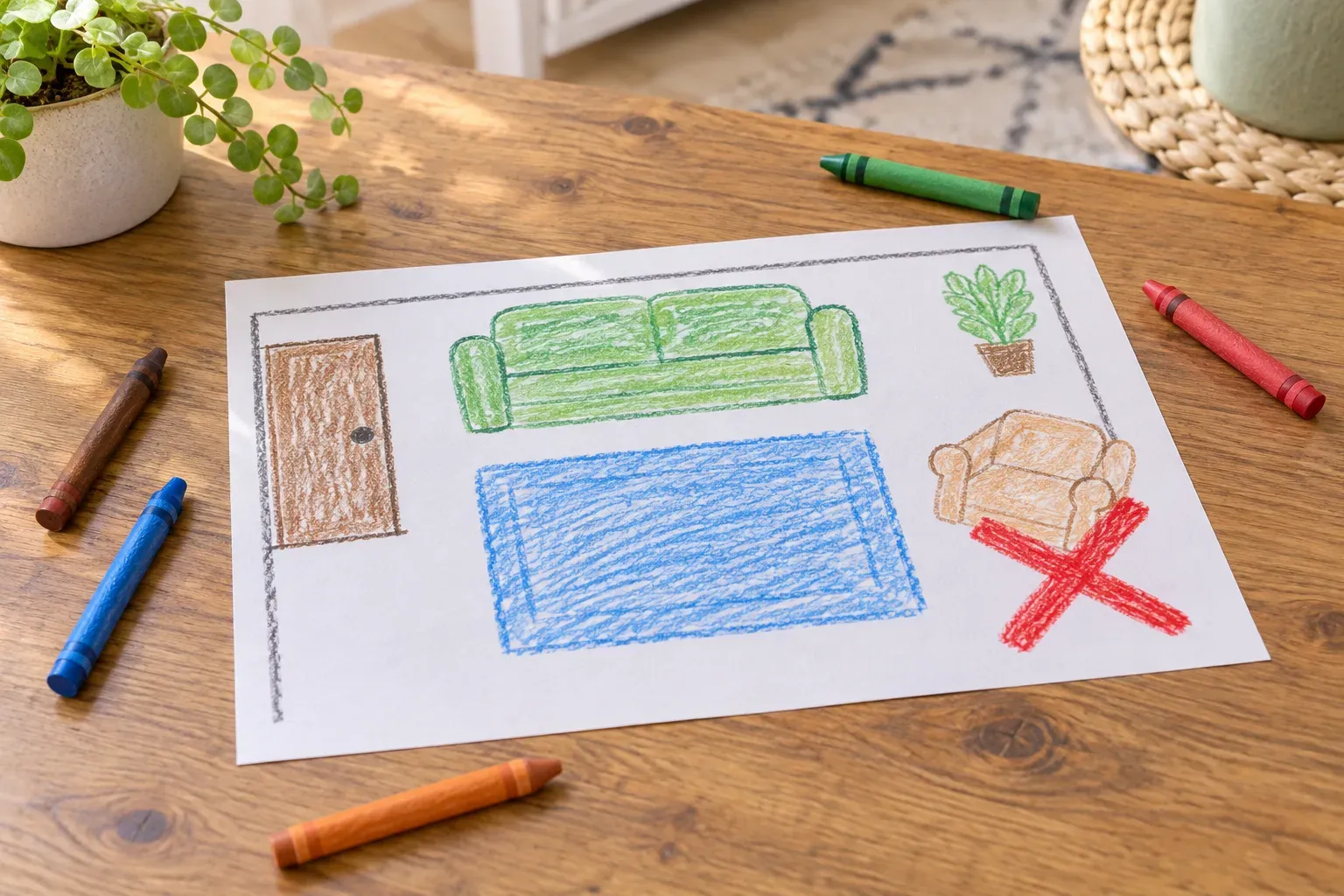
Big simple pictures and one clear X. -
Sit together and talk through the map, pointing to each picture and then to the real thing.
-
Hand over the map and let your child find the way, turning the paper so it faces the same way as the room.
-
Give hints by pointing to the map rather than the hiding place, and celebrate when the X turns up.
-
Once they get it, swap: they hide the treasure and draw a map for you.
What you need
- paper
- crayons or markers
- small treasure such as a toy
- shoebox or paper bag
Don't have it?
- No treasure box? A paper bag with a chest drawn on it, or an old shoebox, is just as exciting.
Stay close
If the treasure is food, check for allergies, and keep hiding places away from bins, sheds and anywhere that needs climbing.
What they are practising
- problem solving. Matching a drawing on paper to a real place, and turning the map to fit the room, takes some working out.
- language. Talking through landmarks and directions like next to, behind and past the tree puts words to where things are.
- creativity. Drawing a map of their own and choosing a hiding spot lets them run the hunt.
Make it easier
For a four-year-old, use three landmarks at most, leave the treasure in plain sight once they reach the X, and walk beside them.
Make it harder
Six-year-olds can follow a trail of numbered maps, each leading to the next, or draw their own map with a key.
Parents ask
- What should the treasure be?
- It does not need to be new. A toy they have not seen for a while, a sticker or a small snack is plenty; the finding is what they remember.
- What if they cannot follow the map?
- Make the pictures bigger and fewer, and walk to the first landmark together. Turning the map to match the room helps most children click.
- Can a younger sibling play too?
- Give the younger one the job of carrying the treasure bag or opening the box at the X, while the older one reads the map.
Find more like this
4 year olds5 year oldsIndoorsOutdoorsLow messGamesWith paper