Games
Picture list scavenger hunt
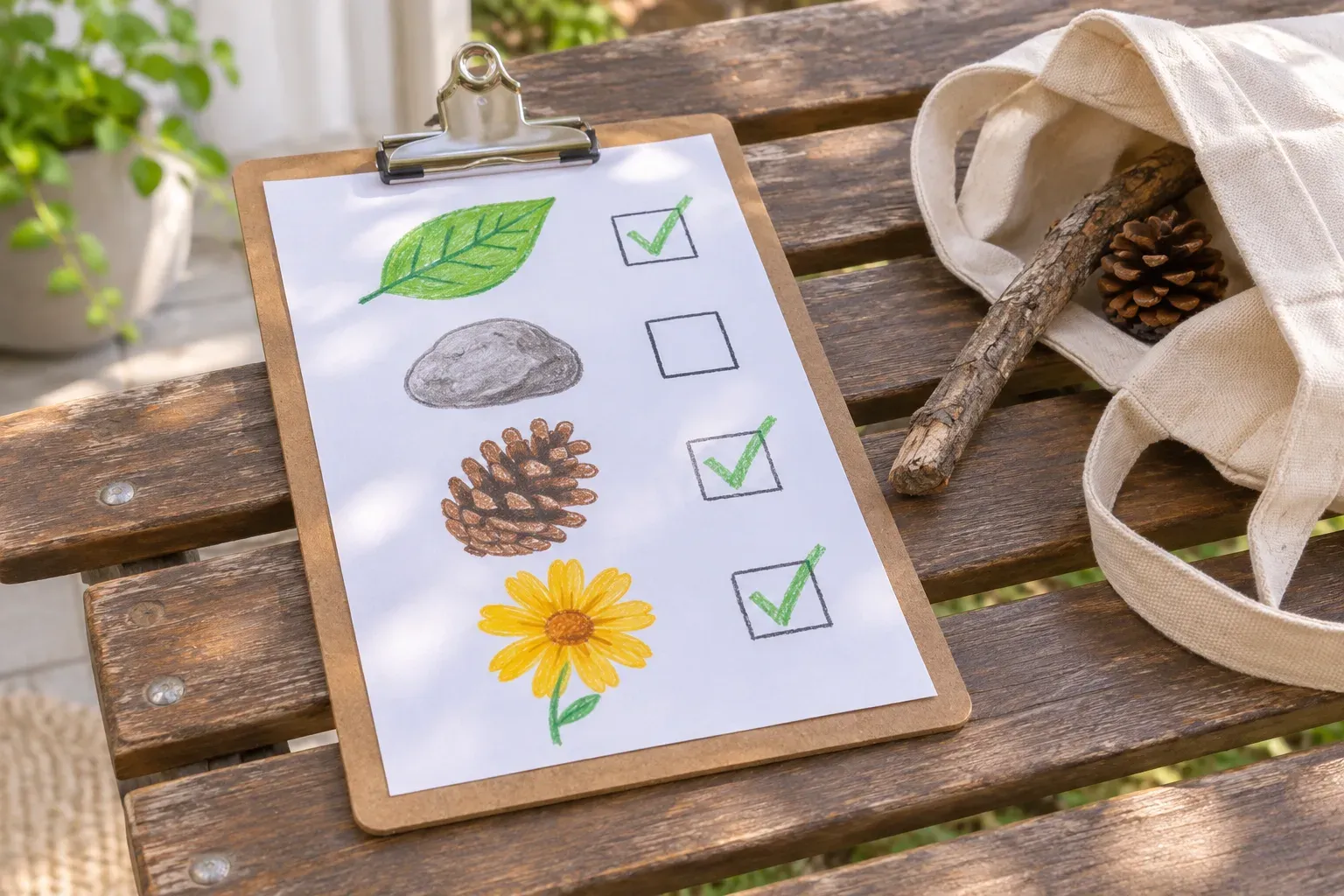
Draw a list of things to find, then hunt for each one around the garden or park and tick it off.
- Age
- 3 to 6 years
- Play time
- 25 min
- Set-up
- 10 min prep
- Where
- Indoors or outdoors
- Who
- Any number of kids
- Clean-up
- Low mess
Ticking things off a list makes children feel very official, even when they cannot read a word, which is why this one uses pictures. Draw the list in five minutes over breakfast and the walk to the park suddenly has a purpose. The list tends to be finished at speed, followed immediately by a request for another. Hang on to the clipboard, as it will come on every outing for the next month.
How to play
-
On a sheet of paper, draw six to ten simple pictures of things to find, such as a leaf, a stone, a stick longer than your hand, a bench and something yellow. Draw a box beside each one.
-
Next to things they should only spot, such as a bird or a flower in someone's garden, draw an eye. Next to things they can pick up, draw a little bag.
-
Clip the list to a clipboard and hand it over with a crayon and a cloth bag, then set off around the garden, park or house.
-
Each time they find something, they tick or colour its box and either pop it in the bag or simply point it out.
-
Help only when asked, or give a nudge such as 'I think I saw something yellow near the gate'.
-
To stretch it, add pictures that need more looking, such as something bumpy, something that smells, or three different leaves.
What you need
- paper
- felt pens
- clipboard
- crayon
- cloth bag
Don't have it?
- No clipboard? Tape the list to the front of a cereal box, which is stiff enough to tick on.
- No cloth bag? An egg carton keeps small finds such as stones and seed pods in separate cups.
Stay close
Check finds before they go in the bag, leave mushrooms, berries and anything sharp or dirty where they are, and wash hands afterwards.
What they are practising
- problem solving. Matching a drawing to a real object, and working out where to look for it, takes careful thinking.
- language. Telling you where they found each thing and what it looks like fills the walk with talk.
- independence. Holding the list and deciding when something counts puts them in charge of the hunt.
Make it easier
For a three-year-old, draw four or five big, obvious things you know are there, and carry the bag for them.
Make it harder
A six-year-old can draw a list for you to find, or hunt by description, such as something rough, something smooth and something that fell off a tree.
Parents ask
- What should I put on a list for the park?
- Things that are reliably there: a leaf, a stick, a stone, a bench, a bin, a bird, something red. Add seasonal finds like blossom or autumn leaves when you can.
- Do they have to collect everything?
- No. Marking the spot-only things with an eye means birds and flowers stay where they are and the bag does not fill with things that should not come home.
- What if they find everything in two minutes?
- Then the list was too easy, which is handy to know for next time. Turn the sheet over and draw three harder ones on the spot.
Find more like this
3 year olds4 year olds5 year oldsIndoorsOutdoorsLow messGamesWith paper