Pretend play
Superhero cape and cuffs
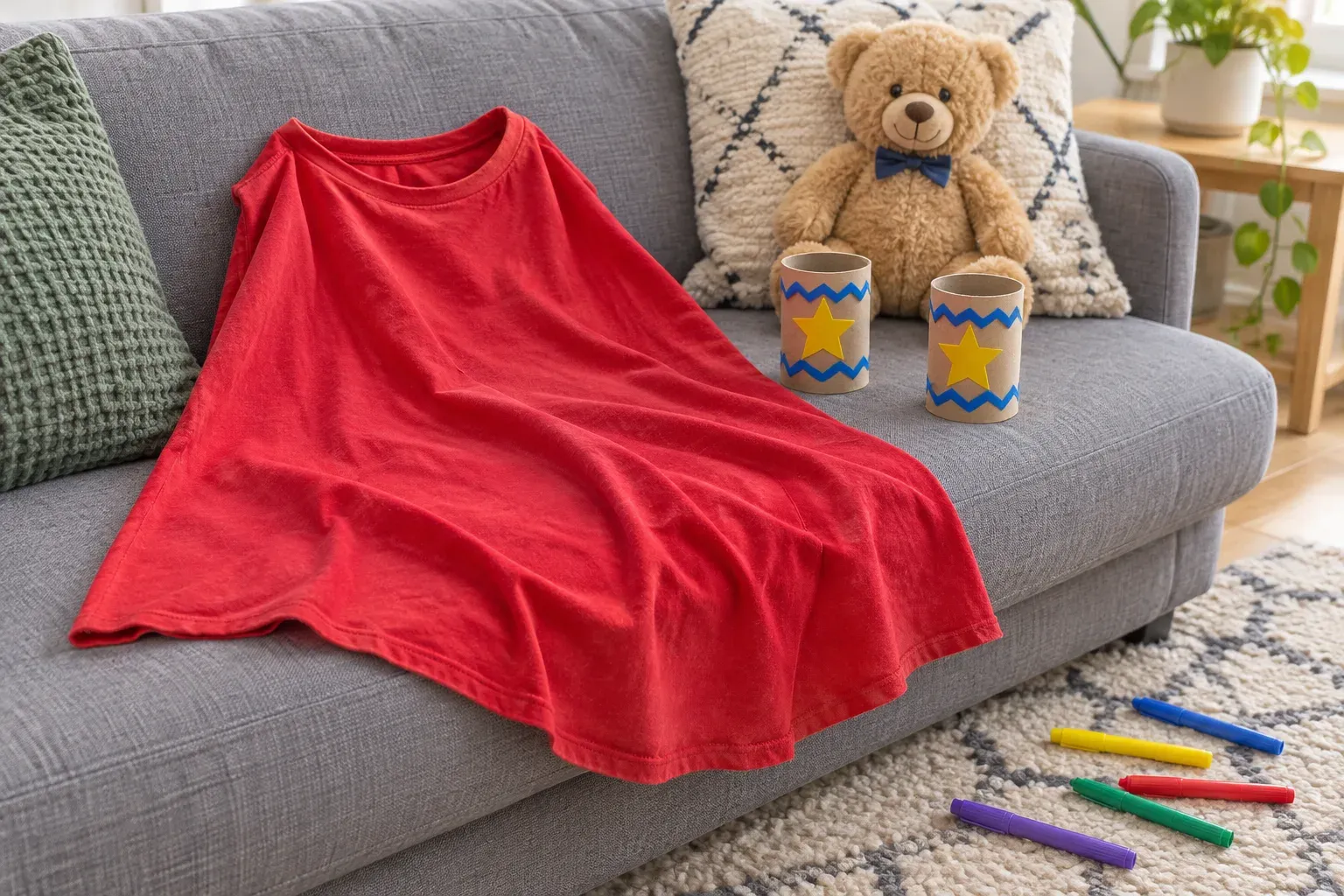
Cut a no-sew cape from an old T-shirt, decorate cardboard-tube cuffs, then dash about rescuing teddies from the sofa.
- Age
- 3 to 6 years
- Play time
- 40 min
- Set-up
- 10 min prep
- Where
- Indoors
- Who
- Any number of kids
- Clean-up
- Low mess
A cape changes how a child walks. Within a minute of putting one on they are running with arms out, checking over their shoulder to see it fly behind them. An old T-shirt makes a cape with no sewing at all, and a cardboard tube gives two cuffs for deflecting imaginary lasers. The making takes about ten minutes and the wearing can last most of the afternoon, including at least one attempt to keep it on at dinner.
Felt pens are called markers in the US, and a kitchen-roll tube is a paper towel tube.
How to play
-
Lay an old adult T-shirt flat. Cut up both side seams and across under the sleeves, then cut away the whole front panel, leaving the neckband in one piece attached to the back. The scissors are your job.
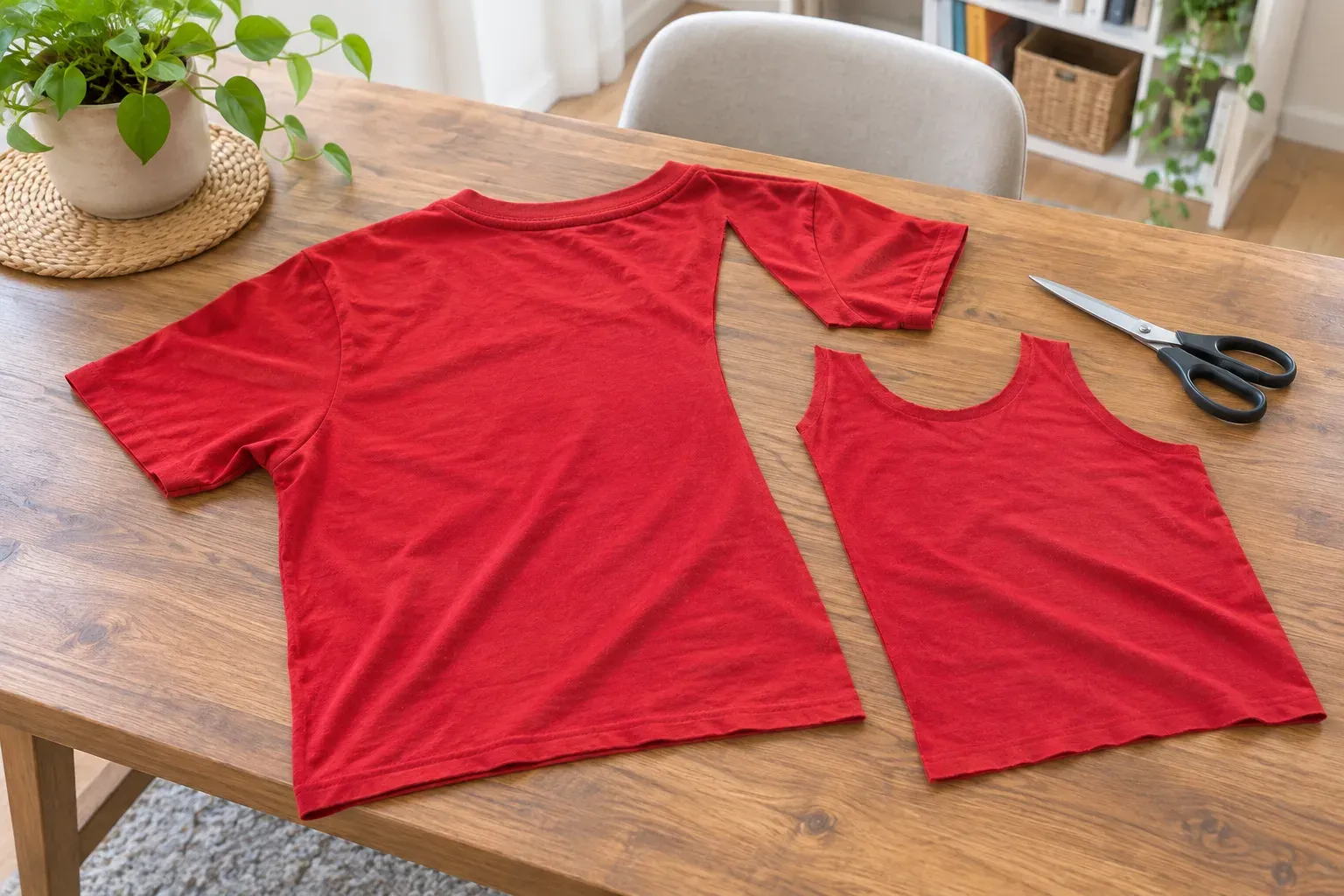
Keep the neckband whole; it holds the cape on. -
Cut a kitchen-roll tube into two pieces about 8 cm long, then slit each one lengthways so it opens and closes around a wrist.
-
Put out felt pens, stickers, scraps of coloured paper and a glue stick, and let your child decorate the cuffs and the cape.
-
Help them pull the neckband over their head so the cape hangs down their back, and slip a cuff onto each wrist.
-
Ask what their superpower is and what needs rescuing, then let the game run. A teddy stranded on the arm of the sofa is a good first emergency.
-
To stretch it, set out a rescue course: crawl under the table, step across a row of cushions and carry a soft toy back to base.
What you need
- old T-shirt
- scissors
- kitchen-roll tube
- felt pens
- stickers
- coloured paper
- glue stick
- cushions
- soft toys
Don't have it?
- No old T-shirt? A small towel tucked into the back of a T-shirt collar makes a cape that simply falls away if it catches.
- No kitchen-roll tube? Strips of thin card about 5 cm wide, curled around the wrist and taped, make cuffs too.
Stay close
Keep the neckband loose enough to slip off easily and never add ties or cords at the neck. Take the cape off before climbing, playground equipment or bed.
What they are practising
- creativity. They invent a superpower, a villain and a rescue, and change the story as the game goes on.
- language. Explaining their power and narrating each rescue out loud gets a lot of talking done.
- fine motor. Colouring the cuffs and pressing stickers onto a curved surface takes careful work.
Make it easier
For a three-year-old, decorate with stickers only and keep the story short: one teddy, one rescue, lots of running.
Make it harder
A six-year-old can design a symbol for the back of the cape, cut it out of paper themselves, and invent a hero name plus a rule for what their power cannot do.
Parents ask
- Is a cape safe to wear around the house?
- It is fine for running about and playing on the floor, as long as the neck is loose and nothing is tied. Take it off before climbing, the playground or bed, since a cape that snags can pull at the neck.
- The cuffs keep sliding off. What can I do?
- Overlap the slit edges a little more and put a short piece of sticky tape across to make the cuff smaller. Keep it loose enough that it does not leave a mark on the wrist.
- How do I stop the younger sibling always being the one who needs rescuing?
- Give them a cape too and make them the sidekick with their own job, such as guarding the base. Swapping who is the hero halfway through heads off most arguments.
Find more like this
3 year olds4 year olds5 year oldsIndoorsLow messPretend playWith paperWith stickersWith soft toys