Nature
Stick raft
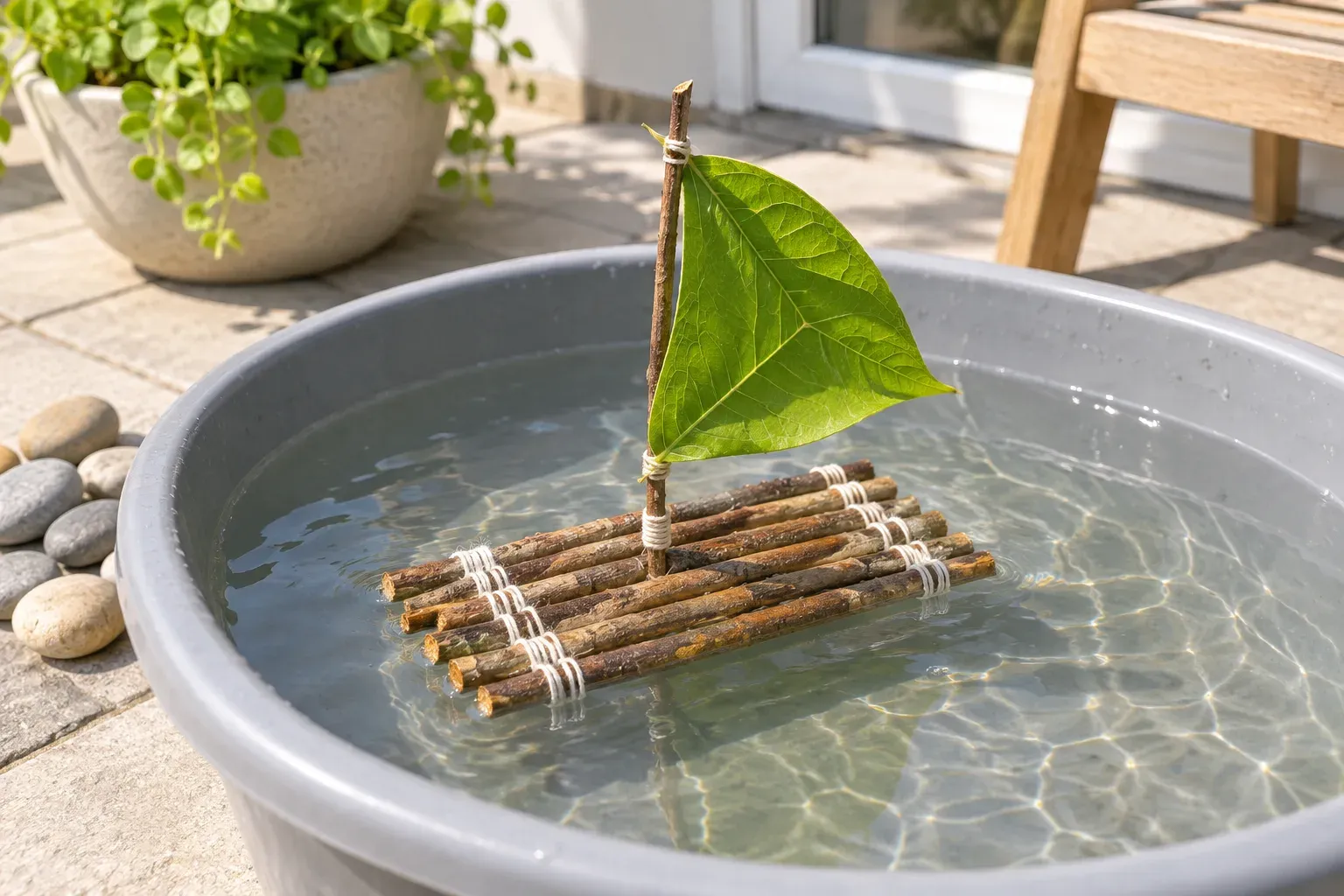
Lash a row of straight sticks together with string, add a twig mast and leaf sail, then float it in a tub.
- Age
- 4 to 6 years
- Play time
- 40 min
- Set-up
- 5 min prep
- Where
- Outdoors
- Who
- Any number of kids
- Clean-up
- Medium mess
Once the idea lands, every stick in the park becomes a candidate. The weaving takes patience, and most four-year-olds need you to hold the row still while they wrap. The first raft usually comes out wonky and floats anyway, which is deeply satisfying. Keep it for a slow afternoon outside, finishing with a fleet race across the paddling pool or a big puddle after rain.
Wool is yarn in the US.
How to play
-
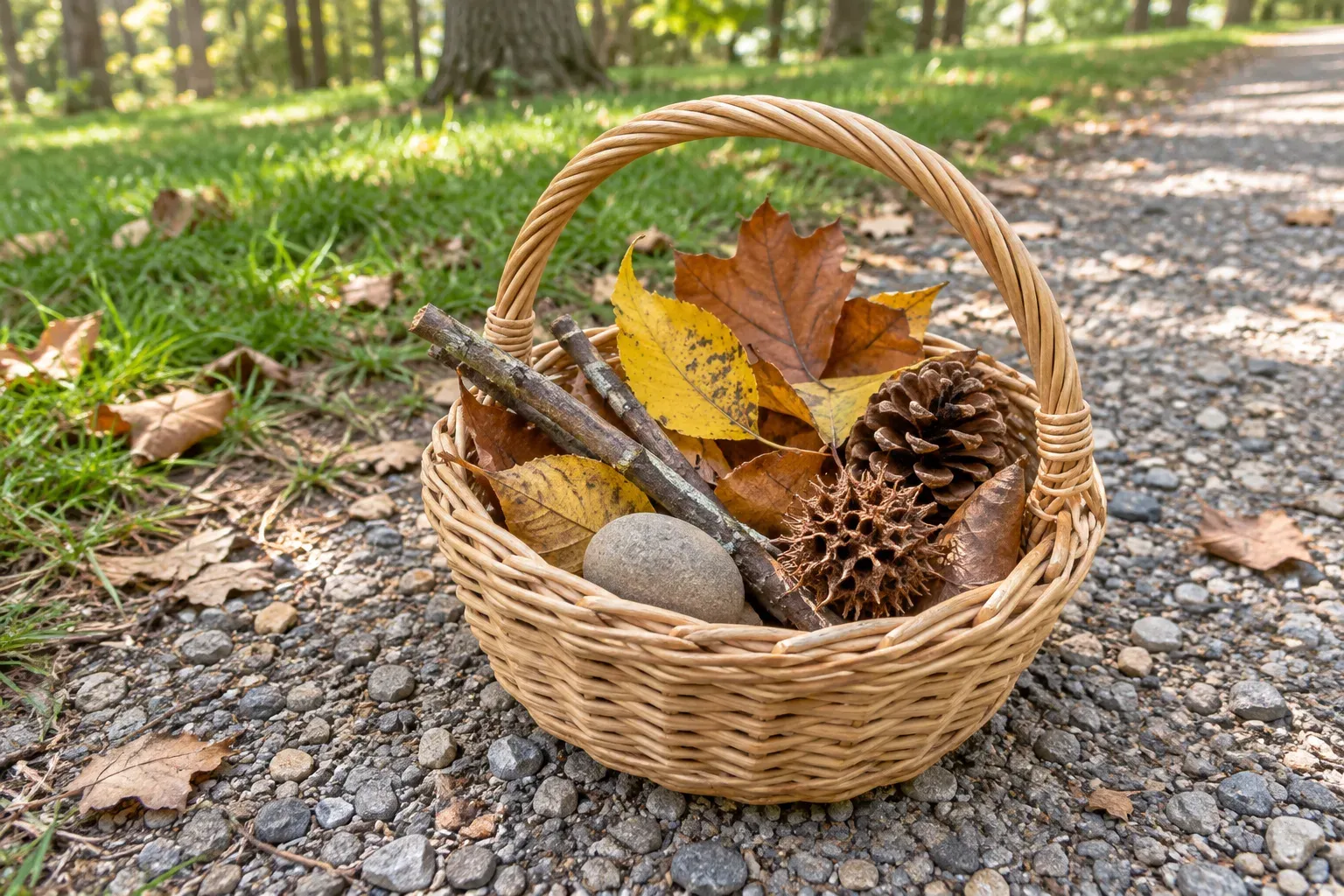
Collect six to eight straight, dry sticks about as long as a pencil and roughly as thick as a finger. Snap or trim them to a similar length; any cutting is yours.
-
Lay them side by side in a flat row on the ground.
-
Tie a piece of string about an arm's length to the end stick, then show your child how to wrap it over and under each stick in turn across the row, pulling tight. Knot it at the far side and repeat at the other end.
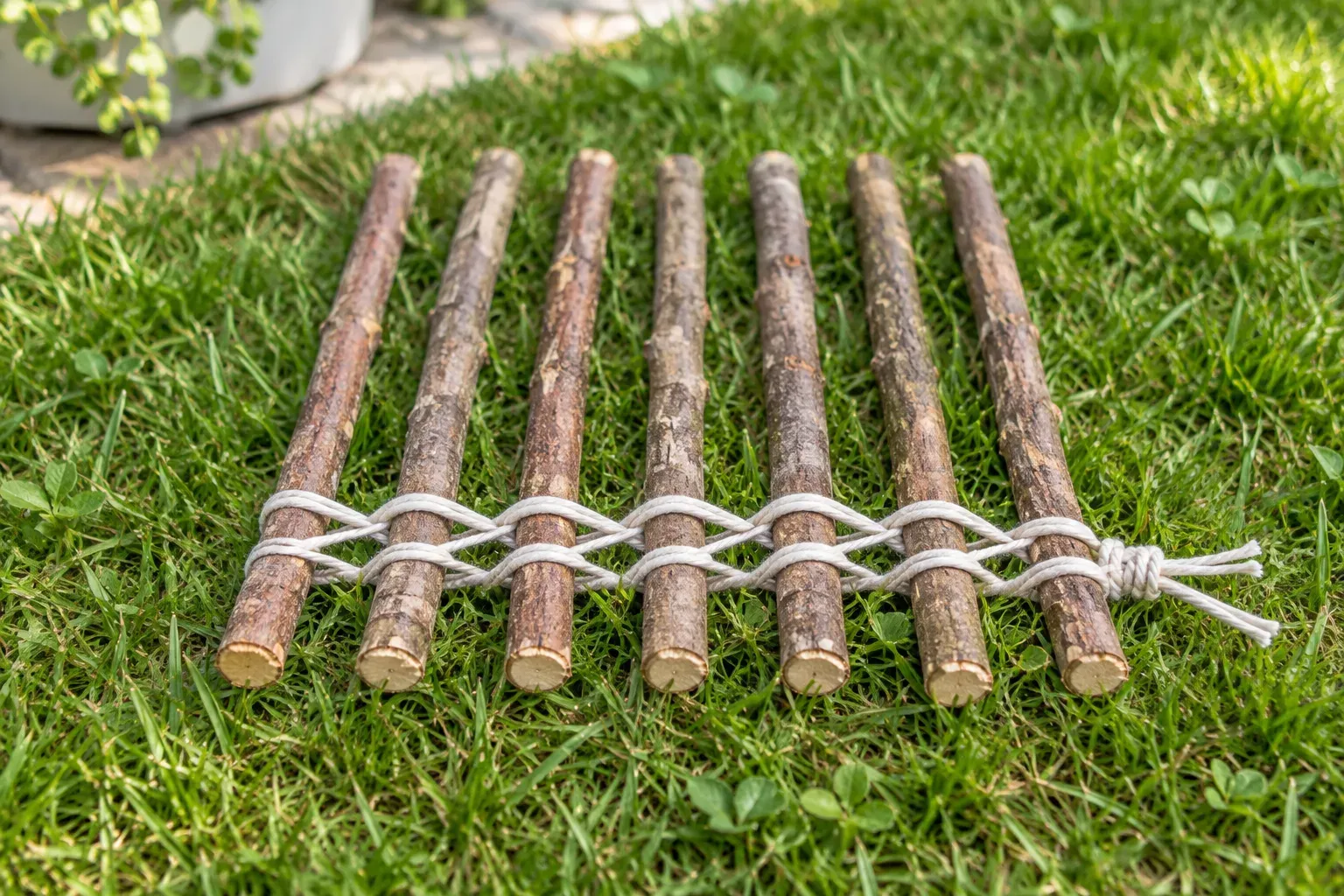
Wrap over and under each stick, pulling tight -
Push a thin twig upright between two of the middle sticks, and thread a large leaf onto it as a sail.
-
Float the raft in a shallow tub, a paddling pool or a big puddle, and blow behind the sail to send it across.
-
To stretch it, load it with pebbles one at a time and guess how many it can carry before it sinks.
What you need
- six to eight straight sticks
- string or wool
- scissors
- a thin twig and a large leaf for the sail
- a shallow tub or paddling pool of water
Don't have it?
- No string? Wool, garden twine or thick rubber bands looped around each end hold the sticks together.
- No big leaf? A triangle of paper threaded onto the mast makes a sail that lasts a few voyages.
Stay close
Keep the water shallow, stay beside your child the whole time, and empty tubs and pools as soon as play ends. Near a creek or pond, stay within arm's reach.
What they are practising
- fine motor. Wrapping string over and under each stick and pulling it tight takes two hands working together.
- problem solving. They watch what happens when the raft tips or comes loose, then change the sticks or the ties to fix it.
- counting. Counting sticks for the row, and pebbles until the raft sinks, gives each number a purpose.
Make it easier
For a four-year-old, use four thick sticks and chunky wool, and let them wrap while you hold the row and tie the knots.
Make it harder
A six-year-old can build a second raft with a different design, such as two layers crossed, and race them to see which is faster or carries more.
Parents ask
- Why does the raft fall apart in the water?
- String loosens as the sticks get wet. Wrap twice around each stick and pull tight, or add a third tie across the middle.
- Will green sticks float?
- Fresh, sappy sticks sit lower and sometimes sink. Dry, dead sticks from the ground are lighter and work much better.
- Can we sail it on a creek?
- Only somewhere shallow and calm with you right beside them, and be ready to wave it goodbye, as even a gentle current wins quickly.