Nature
Leaf rubbings
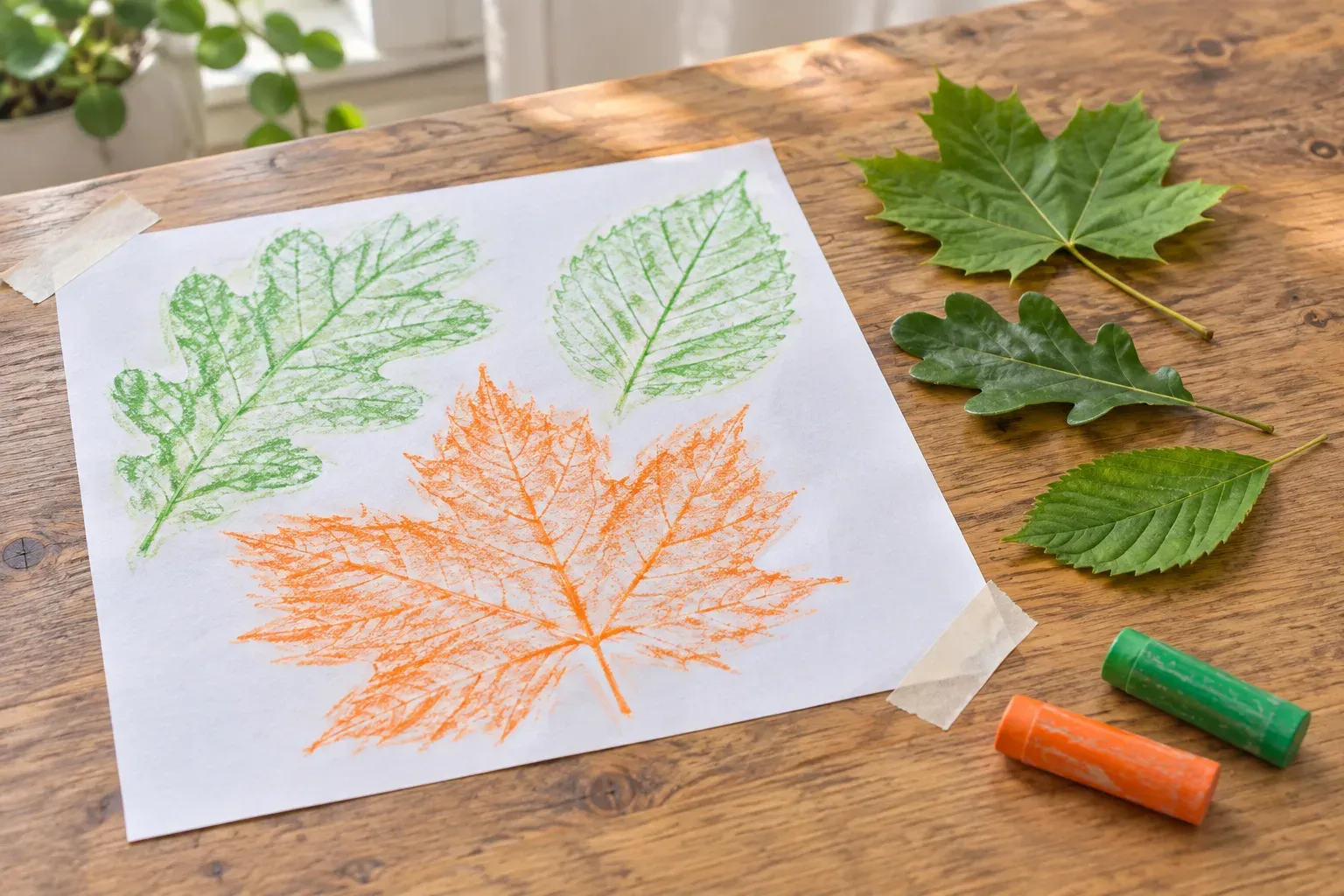
Lay fresh leaves under thin paper and rub over them with the side of a crayon until the veins and edges appear.
- Age
- 3 to 6 years
- Play time
- 20 min
- Set-up
- 15 min prep
- Where
- Indoors or outdoors
- Who
- Any number of kids
- Clean-up
- Low mess
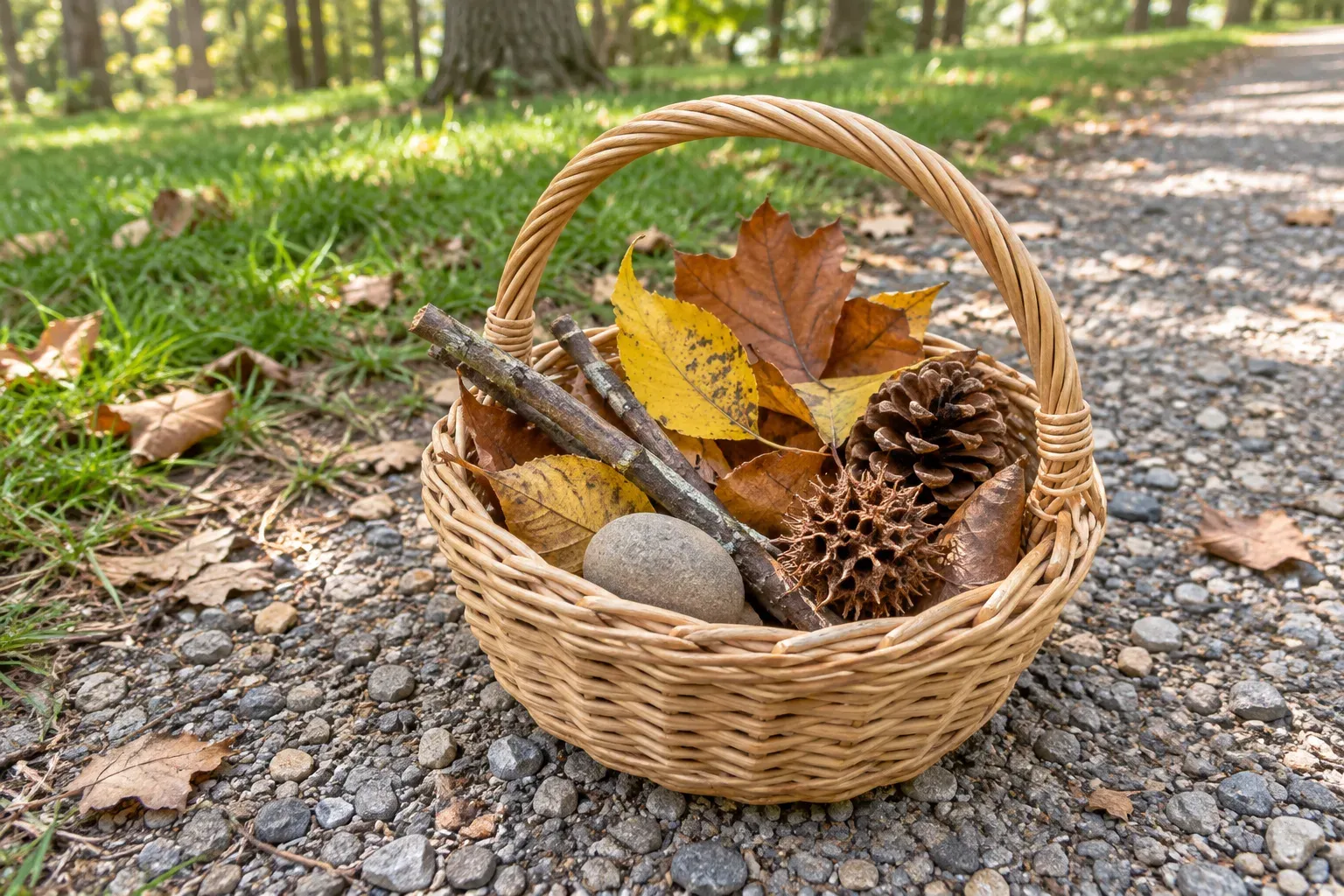
A leaf hiding under paper and appearing as you rub is one of those small tricks children ask to see again and again. Start with a short walk to gather leaves, which is half the fun, and then settle at a table indoors or on a flat paving stone. Under-fours often press too lightly at first or rub with the tip of the crayon, so a few faint attempts usually come before the veins show up clearly.
How to play
-
Go out together and collect a handful of leaves in different shapes. Fresh, flat ones with raised veins work best, as dry ones crumble.
-
Peel the paper wrapping off a few chunky crayons so they can be used on their sides.
-
Lay a leaf on a table with the bumpy vein side facing up, put a sheet of thin paper over it, and tape the paper's corners down so it does not slide.
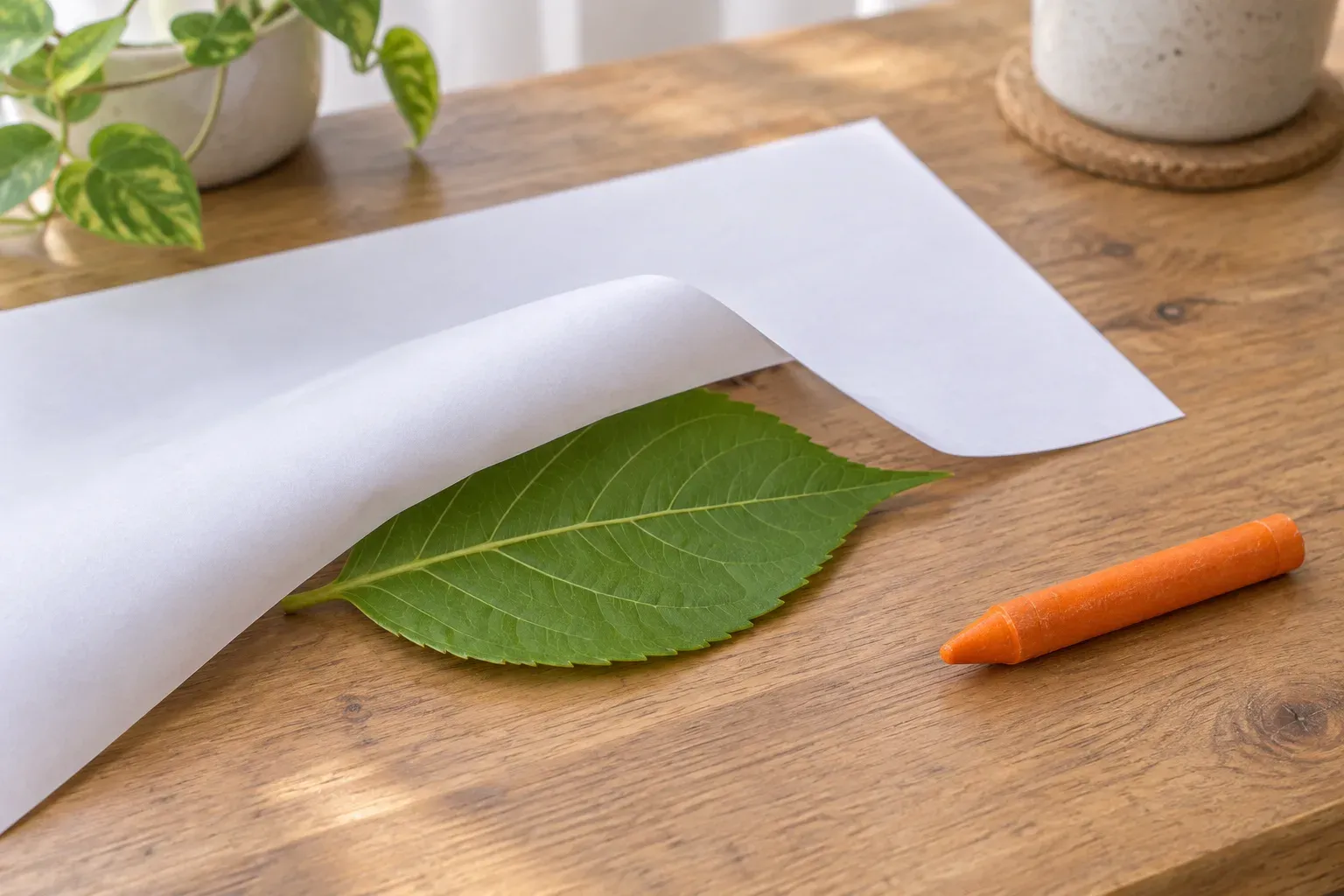
Bumpy vein side up, paper on top, corners taped. -
Show your child how to lay the crayon flat and rub it firmly back and forth over the leaf until the shape and veins appear.
-
Let them try different leaves and colours on the same page, overlapping if they like.
-
To stretch it, cut the rubbings out with child-safe scissors and arrange them into a tree or a collage.
What you need
- fresh leaves
- thin paper
- chunky crayons
- masking tape
- child-safe scissors
Don't have it?
- No thin paper? Tracing paper or tissue paper shows the veins more sharply, though tissue tears if they press hard.
- No crayons? A soft pencil held on its side works, just more slowly.
Stay close
Collect only leaves you recognise, skip anything prickly or known to irritate skin, and wash hands after handling plants.
What they are practising
- fine motor. Rubbing evenly with the side of a crayon while the other hand holds the paper still means two hands doing different jobs.
- language. Comparing leaves gives them words to use: pointy, round, jagged, bumpy and smooth.
Make it easier
For a three-year-old, tape both the leaf and the paper down firmly and give them a big, flat crayon so the shape appears with almost any rubbing.
Make it harder
A six-year-old can make a rubbing of every leaf from one walk and match each rubbing back to its leaf, or go looking for other textures to rub, such as bark, brick or a doormat.
Parents ask
- Which leaves give the best rubbings?
- Fresh, fairly large leaves with thick veins on the back. Very small, waxy or dried-out leaves give faint, patchy results.
- Why is nothing showing up?
- Usually the leaf is the wrong way up or they are using the crayon tip. Turn the leaf so the bumpy back faces the paper and rub with the long side of the crayon.
- Can we keep the leaves for another day?
- Press them between sheets of paper inside a heavy book for a week or two and they dry flat, ready for more rubbings or a collage.
Find more like this
3 year olds4 year olds5 year oldsIndoorsOutdoorsLow messNatureWith tapeWith paper