Nature
Stargazing on a blanket
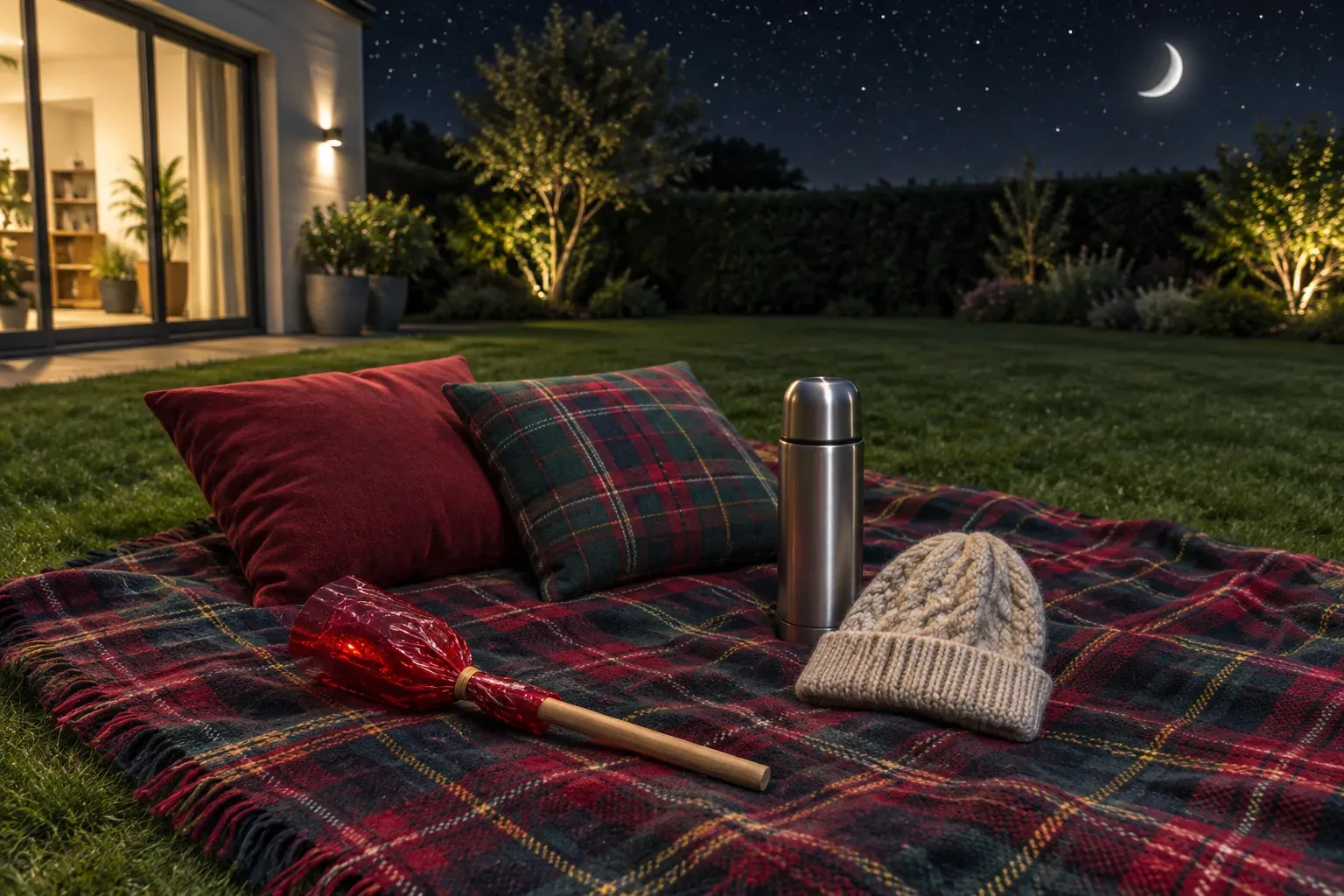
Lie on a blanket in the garden after dark, let your eyes adjust, then find the moon, bright stars and passing satellites.
- Age
- 4 to 6 years
- Play time
- 30 min
- Set-up
- 10 min prep
- Where
- Outdoors
- Who
- Any number of kids
- Clean-up
- Low mess
Being allowed outside in the dark feels like a big deal at four, and that alone keeps most children lying still and looking up. Winter is easiest, since the sky is dark by six or seven and the air is often clearer. City skies show far fewer stars, but the moon and a couple of planets still shine through. Plan on twenty minutes before the cold wins; anything longer is a bonus.
A torch is a flashlight in the US.
How to play
-
Pick a clear night, ideally in autumn or winter when it gets dark before bedtime, and check the forecast for clear skies.
-
Lay a blanket and pillows on the lawn or a balcony, away from house lights, and dress everyone warmly, with hats if it is cold.
-
Turn off the outside lights, lie down and wait about ten minutes for your eyes to adjust. Cover the torch with red cellophane so it does not undo the adjustment.
-
Find the moon first, then the brightest dot in the sky, which is often a planet and shines steadily instead of twinkling.
-
Join stars together like a dot-to-dot by tracing them with a finger, and make up names for the shapes. Watch for a steady moving light, which is a satellite or the space station.
-
To finish, let your child pick one star to say goodnight to, and try to find it again on the next clear night.
What you need
- picnic blanket
- pillows
- warm clothes or a sleeping bag
- torch
- red cellophane and a rubber band (optional)
- warm drink in a flask (optional)
Don't have it?
- No red cellophane? A red sock pulled over the torch dims it enough.
Stay close
Stay together in your own garden or somewhere you know well, and keep hot drinks with the adult. Use the torch on the way in and out so nobody trips.
What they are practising
- language. Describing where a star is, above the roof or near the tree, and naming made-up shapes take careful words.
- counting. Counting stars as they appear, or how many make a shape, keeps eyes moving across the sky.
- problem solving. Telling a twinkling star from a steady planet or a moving satellite means comparing and watching closely.
Make it easier
For a four-year-old, keep it short and concrete: find the moon, count five stars, and spot one brighter than the rest.
Make it harder
A six-year-old can learn one real star pattern, such as the Southern Cross or the Big Dipper depending on where you live, and find it again on later nights.
Parents ask
- How dark does it need to be?
- Darker is better, but even a suburban garden shows the moon, a few planets and the brightest stars once the house lights are off.
- What if my child is scared of the dark?
- Start on a balcony or by the back door with an indoor light just visible behind you, and let them be in charge of the torch.
- Should we use a star app?
- A bright phone screen spoils your night vision for several minutes, so check it before you lie down and then put it away.