Art
Shadow drawing
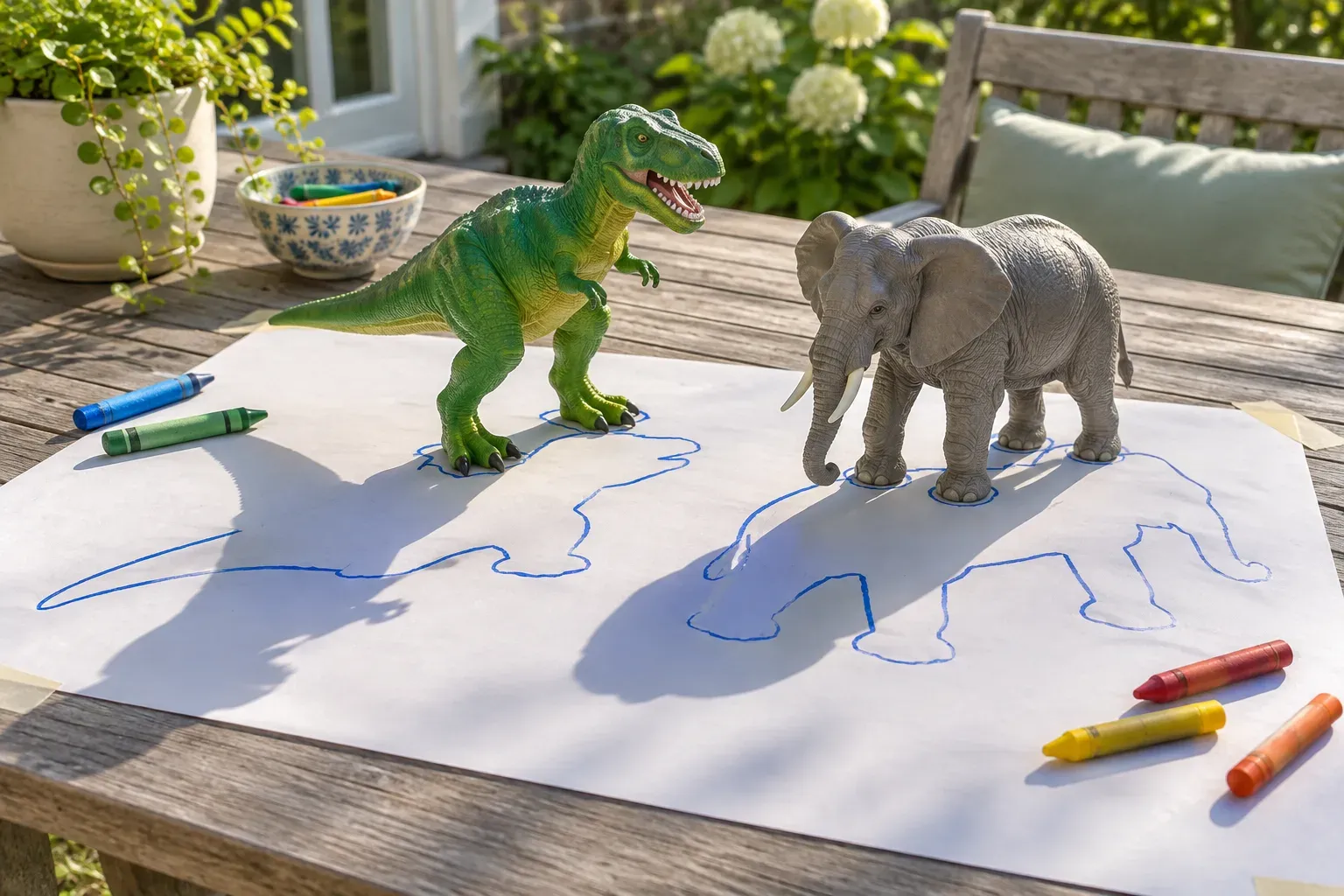
Stand toy animals on paper in the sun and trace around their shadows, then colour the shapes in.
- Age
- 3 to 6 years
- Play time
- 20 min
- Set-up
- 5 min prep
- Where
- Indoors or outdoors
- Who
- Any number of kids
- Clean-up
- Low mess
Most children ignore shadows until something makes them look properly, and tracing one does exactly that. A toy dinosaur on a sunny table casts a shape that is almost but not quite the dinosaur, and the differences become fascinating. Mornings and late afternoons give the longest, crispest shadows. The shadow will creep while they draw, which causes some outrage at first and then, usually, a lot of interest.
A torch is a flashlight in the US, and felt pens are markers.
How to play
-
On a sunny morning or late afternoon, when shadows are long, tape a large sheet of paper to a flat spot outside such as a garden table or paving.
-
Stand a few chunky toy animals along one edge of the paper so their shadows fall across it.
-
Show your child how to trace around the edge of a shadow with a felt pen, going slowly and keeping the pen on the line.
-
Let them trace each shadow, then colour in the shapes or add eyes, spots and stripes.
-
To stretch it, trace the same toy's shadow again an hour later in a different colour and compare how it has moved and changed size.
-
On a cloudy day, do the same indoors in a dim room with a torch resting on a pile of books, shining across the toys from the side.
What you need
- large paper
- masking tape
- chunky toy animals
- felt pens
- crayons
- torch (for a cloudy day)
Don't have it?
- No toy animals? Kitchen things with clear outlines, such as a mug, a whisk or a funnel, cast good shadows.
- No sun? A torch shone across a table indoors gives a sharp shadow at any time of day.
Stay close
In strong sun, use sunscreen and a hat and remind them never to look at the sun. Indoors, keep the torch pointed at the toys, not at eyes.
What they are practising
- fine motor. Tracing along the edge of a shadow takes slow, steady control of the pen.
- problem solving. They notice the shadow is longer or shorter than the toy and start wondering why it moves.
- creativity. Once traced, each outline can become a creature of their own with new colours and patterns.
Make it easier
For a three-year-old, choose one big toy with a simple outline, tape the paper down well, and let them colour the shadow in rather than trace exactly.
Make it harder
Six-year-olds can trace the same shadow in the morning, at midday and in the afternoon and compare all three, or arrange toys into a shadow scene and draw a background.
Parents ask
- Why does the shadow keep moving?
- The sun moves across the sky and the shadow swings round with it. Over twenty minutes it shifts noticeably, which is worth pointing out rather than fixing.
- What time of day works best?
- Mid-morning or mid to late afternoon. At midday shadows are short and stubby, and very early or late they stretch right off the paper.
- Can we do it inside?
- Yes, with a torch or desk lamp shining from the side in a dim room. Rest the light on a pile of books so it stays still.
Find more like this
3 year olds4 year olds5 year oldsIndoorsOutdoorsLow messArtWith tapeWith paper