Art
Mud painting
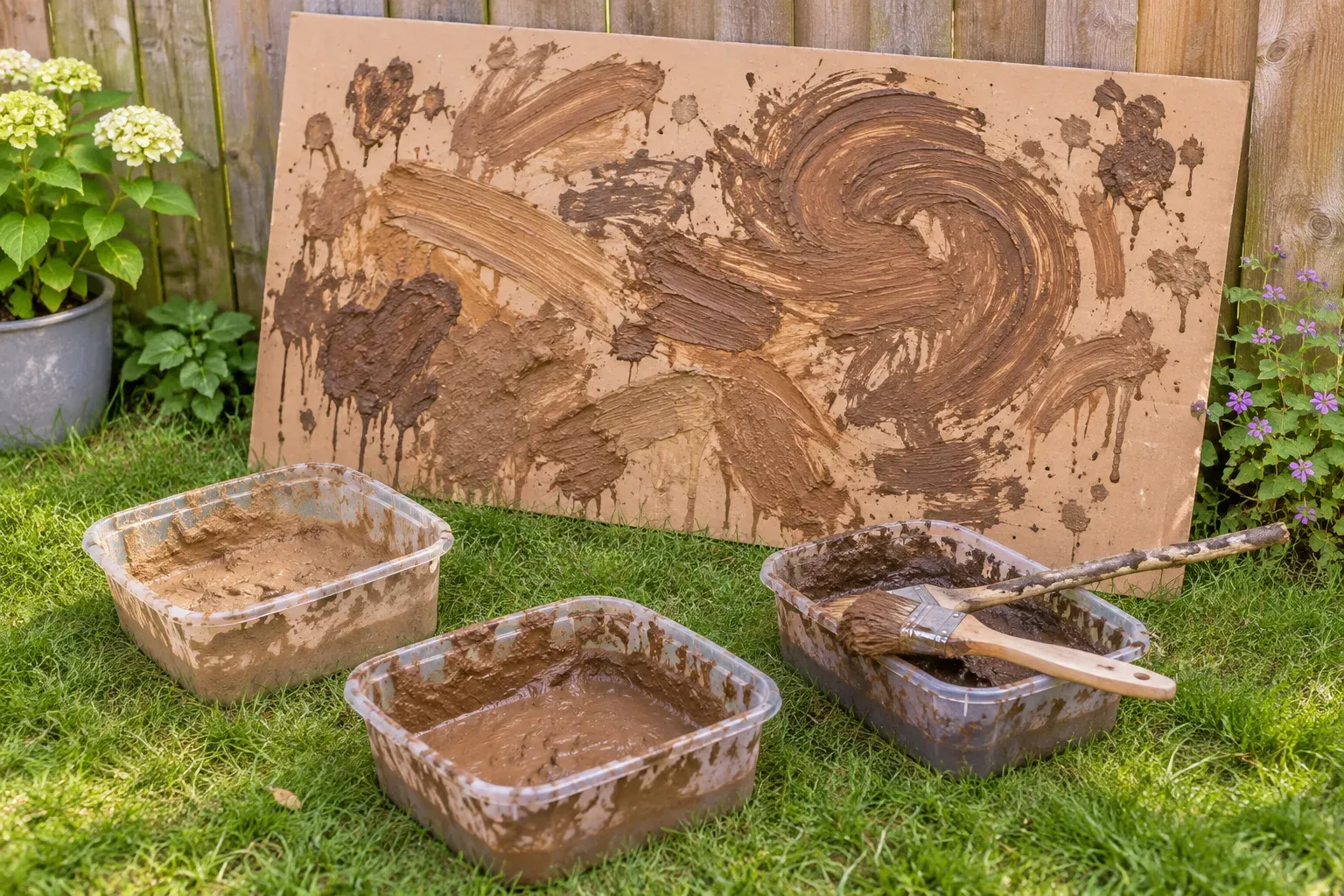
Stir garden soil and water into brown paint, then brush, dab and smear it across a big sheet of cardboard.
- Age
- 2 to 6 years
- Play time
- 30 min
- Set-up
- 10 min prep
- Where
- Outdoors
- Who
- Any number of kids
- Clean-up
- High mess
Some days the garden is already muddy and fighting it is pointless. Stirring soil and water into paint gives that mess a job, and children who are lukewarm about brushes indoors will happily daub a fence-sized piece of cardboard with brown sludge. Different soils give surprisingly different colours, from grey to nearly orange. The finished picture will hold about a third of the mud, and your child will be wearing the rest.
How to play
-
Dig a few spoonfuls of soil into each of two or three tubs, from a patch you know pets do not use and that has not been sprayed or fertilised.
-
Add water a little at a time and stir until it is like thick paint. Make one tub runny and one thick, or use soil from different spots for different browns.
-
Lean a large sheet of cardboard against a fence or lay it flat on the ground.
-
Hand over brushes, sticks and a few leaves, and let your child paint, dab and smear. Hands are allowed.
-
To stretch it, stir a little sand into one tub for texture, or press leaves and grass into the wet mud to make a picture.
-
Rinse brushes and hands with the hose or a bucket of water, and leave the cardboard to dry in the sun, where the mud goes pale and cracked.
What you need
- garden soil
- water
- old spoon
- plastic tubs
- large cardboard sheet
- paintbrushes
- sticks
- leaves
- old clothes
- hose or bucket of water
Don't have it?
- No cardboard? Paint straight onto paving stones or a fence, and rain or the hose cleans it off.
- No paintbrushes? An old sponge or a bunch of long grass held together makes a decent brush.
Stay close
Use soil from a patch free of pets, weedkiller and fertiliser, cover any cuts, wash hands well afterwards and remind them that mud is not for tasting.
What they are practising
- sensory exploration. Runny, thick and gritty mud each feel different on a brush and on skin.
- creativity. With only brown to work with, they invent through texture: scratching, dabbing and pressing leaves in.
- colours. Soil from different places gives several browns to compare and sort.
Make it easier
For a two-year-old, give them one tub of thick mud and a wide brush, or skip the brush and let them make hand prints.
Make it harder
A five or six-year-old can collect soil from three different spots and line the colours up from light to dark, or scratch a drawing into a thick layer with a stick.
Parents ask
- Is garden soil safe for small children to play with?
- Generally yes, with sensible precautions: pick a spot pets do not use, avoid anywhere sprayed or fertilised, cover any cuts and wash hands thoroughly afterwards.
- Will the mud come out of clothes?
- Mostly, if you let it dry, brush off the crust and then wash as normal. Red or clay soils can leave a tint, so old clothes are the honest answer.
- What if they want to do it every day?
- Set aside a corner of the garden as the mud patch and keep a bucket of brushes by the back door. It costs nothing to keep going.
Find more like this
2 year olds3 year olds4 year olds5 year oldsOutdoorsArtWith a cardboard boxWith paint