Pretend play
Pretend shop
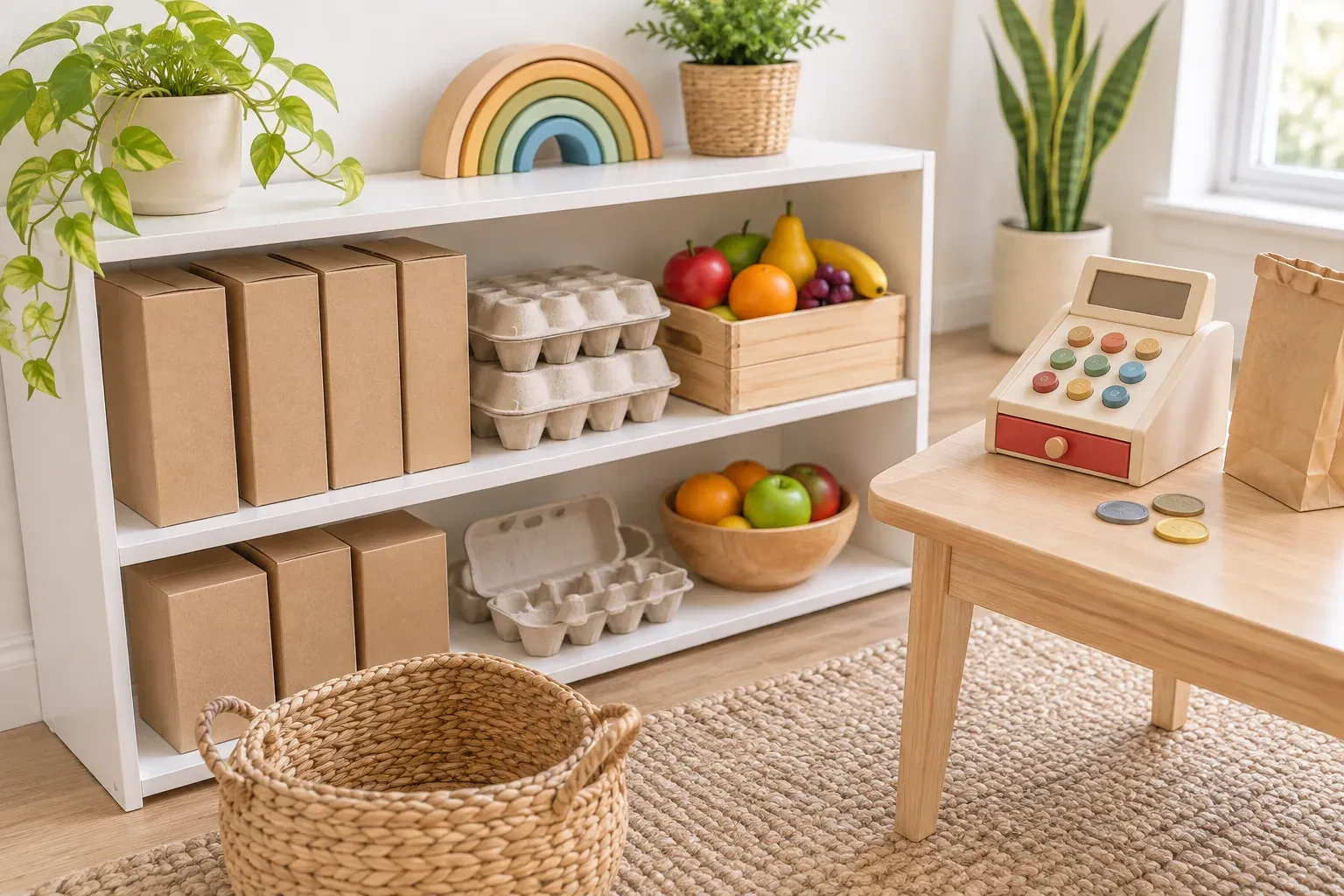
Set out empty packets and play food on a low shelf, then take turns being shopper and shopkeeper at the till.
- Age
- 18 months to 6 years
- Play time
- 40 min
- Set-up
- 10 min prep
- Where
- Indoors
- Who
- Two or more kids
- Clean-up
- Low mess
Save the cereal boxes for a week and you have stock. Shops have a script children already know from the trolley seat: hello, beep, that will be three coins, bye. Toddlers mostly load and unload the basket, while older ones get very strict about paying. It can run all morning if the shelf stays set up. Expect to buy the same tin of beans eleven times and to be short-changed.
American families tend to call this playing store, and a till is a cash register there.
How to play
-
Arrange empty food packets and play food on a low shelf or along a bench at your child's height.
-
Set up a toy till or calculator on a small table nearby, with the play money next to it.
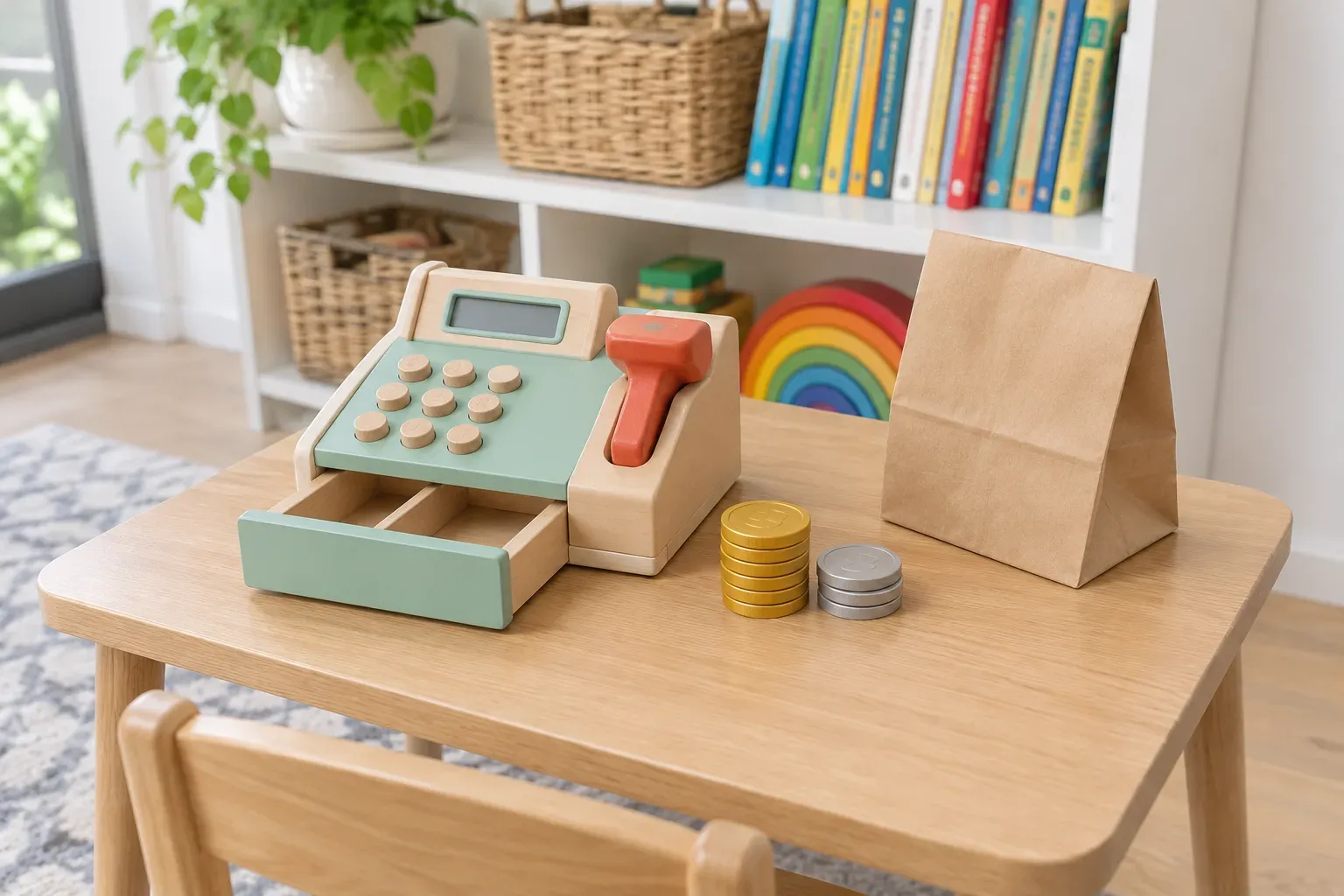
Keep the till close to the shelf so shopping flows -
Give the shopper a basket or bag and some of the play money.
-
Be the shopkeeper first. Greet your customer, name each item as you ring it up, ask for the money and pack the bag.
-
Swap roles so your child runs the till.
-
For older children, give the shopper a short list to find, or put a price of one to five coins on each item.
What you need
- empty food packets
- play food
- basket or bag
- toy till or calculator
- play money
Don't have it?
- No toy till? A calculator, or a shoe box with a slot cut in the lid, takes the money convincingly.
- No play money? Cut large circles from a cereal box, which are also a safer size around under-threes.
- No play food? Unopened tins and packets from the cupboard work, as long as nothing is glass.
What they are practising
- language. Greeting a customer, naming each item and asking for payment rehearses the polite back-and-forth of a real errand.
- turn taking. Shopper and shopkeeper each have their part and must wait for the other to finish before the next step.
- counting. Counting coins into a hand or items into a basket matches one number to each thing.
Make it easier
For the youngest, forget the money. They fill a basket, bring it to you, and hear each thing named as you take it out.
Make it harder
Put price labels of one to five coins on the items and have a six-year-old count out the right amount, or work out the total for two things. A written shopping list adds some reading to the errand.
Parents ask
- Is play money safe for my toddler?
- Small plastic coins are a choking risk for under-threes. Use paper notes or large card circles until the youngest is past mouthing things.
- Should I wash the empty packets first?
- Rinse and dry anything that held food and tape boxes shut. Skip opened tins, since the rims can be sharp.
- How do I play shop with two children of different ages?
- Make the older one shopkeeper, with prices and change to work out, and the younger one the customer with a basket. Swap when the shopkeeper tires of it.
Find more like this
1 year olds2 year olds3 year olds4 year olds5 year oldsIndoorsLow messTwo or more kidsPretend play