Nature
Minibeast hunt
Lift logs, peer under leaves and check fence posts in the garden or park, ticking off each creature you find.
- Age
- 3 to 6 years
- Play time
- 30 min
- Set-up
- 5 min prep
- Where
- Outdoors
- Who
- Any number of kids
- Clean-up
- Low mess
Give a three-year-old a magnifying glass and a garden, and the woodlice finally get the attention they deserve. Damp mornings after rain are best, when snails and worms are out and about. You will spend a lot of time crouching, and some hunts turn up nothing but ants. Expect at least one squeal, sometimes from you, when a pot is lifted and something fast runs out from underneath.
Plenty of people just call it a bug hunt.
How to play
-
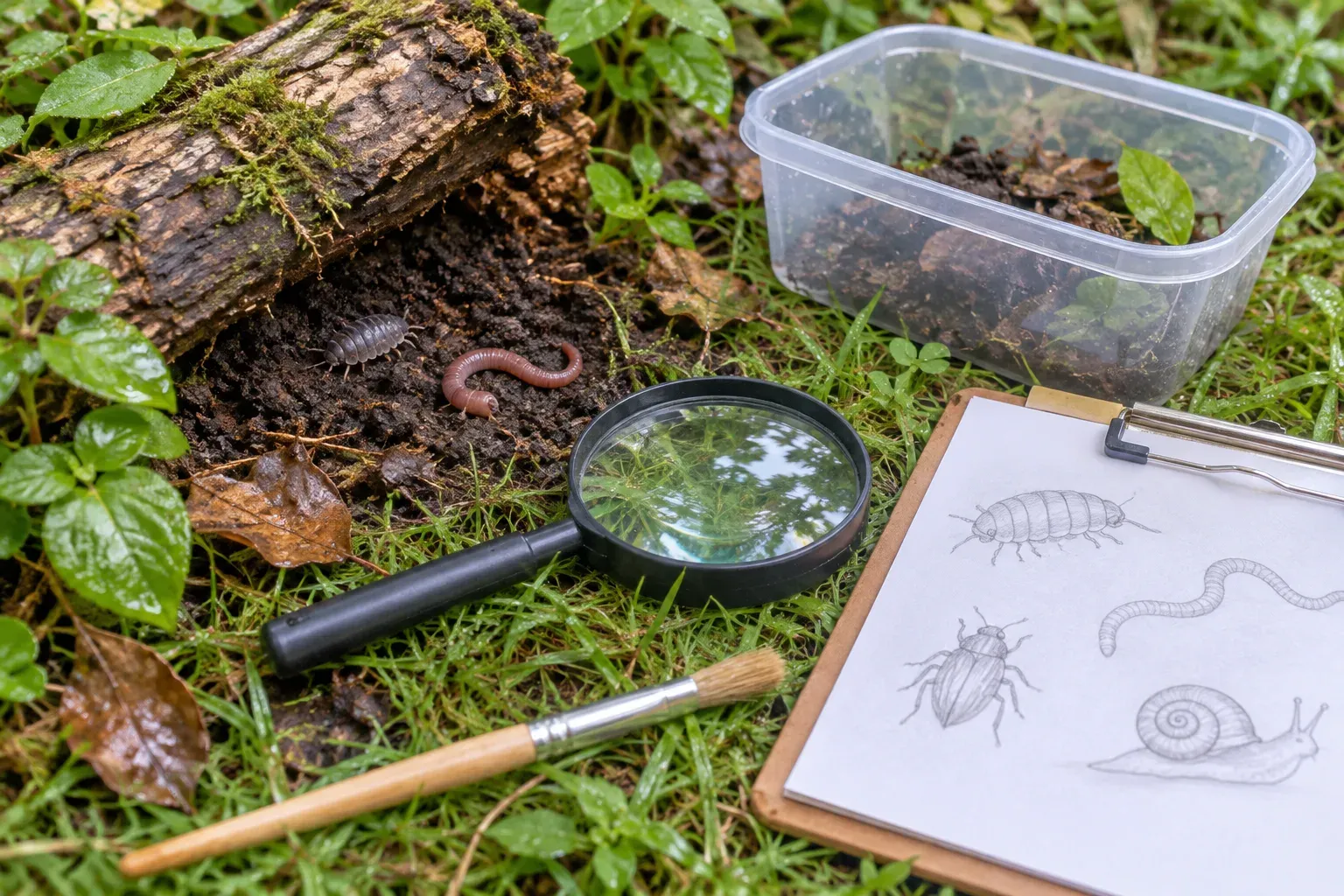
Draw a quick picture checklist with seven boxes: a worm, a snail, an ant, a woodlouse, a spider, a beetle, and a blank one for a surprise.
-
Head for damp, shady places: under pots and logs, beneath leaf piles, along fence posts and in long grass. You lift anything heavy, rolling it towards you.
-
When you spot something, crouch down and look together through the magnifying glass. Ask how many legs it has and where it might be going.
-
For a closer look at a slow creature like a woodlouse or snail, coax it onto the tub with the soft paintbrush, look for a minute, then let it go.
-
Tick each one off the checklist, and draw anything new in the blank box.
-
Put every creature, log and stone back exactly as you found them, and wash hands when you get inside.
What you need
- paper and pencil for a picture checklist
- clipboard or a book to lean on
- magnifying glass
- clear plastic tub
- soft paintbrush
Don't have it?
- No magnifying glass? Pop a clear plastic cup upside down over the creature for a few seconds and look through the side.
- No soft paintbrush? A large leaf makes a gentle scoop.
Stay close
Look but do not touch spiders, ants, bees or hairy caterpillars, which can bite or sting, and let an adult lift logs and stones. Wash hands afterwards.
What they are practising
- counting. Counting legs, spots or how many snails are under one pot gives numbers a real job.
- language. They describe what they find, slimy, shiny, speedy or curled up, and pick up the names for each creature.
- problem solving. Working out where creatures might hide, and why the damp side of a log has more, is detective work.
Make it easier
For a three-year-old, keep the checklist to three creatures, and do the spotting side by side rather than sending them off alone.
Make it harder
A five- or six-year-old can tally how many of each they find, count legs to tell insects from spiders and woodlice, and draw the strangest one.
Parents ask
- Can we keep one as a pet for the day?
- Better not. Most minibeasts dry out or overheat in a tub within an hour, so a minute's look and then home again is kinder.
- My child is scared of bugs. Should we still try?
- Start with snails and worms, which are slow and calm, and let them watch from a step away. Holding the checklist is a job that keeps them involved without getting close.
- What time of year works best?
- Spring and autumn, just after rain, are the busiest. In summer, go early in the morning or late in the afternoon when it is cooler.
Find more like this
3 year olds4 year olds5 year oldsOutdoorsLow messNatureWith paintWith paperWith books