Art
Leaf printing
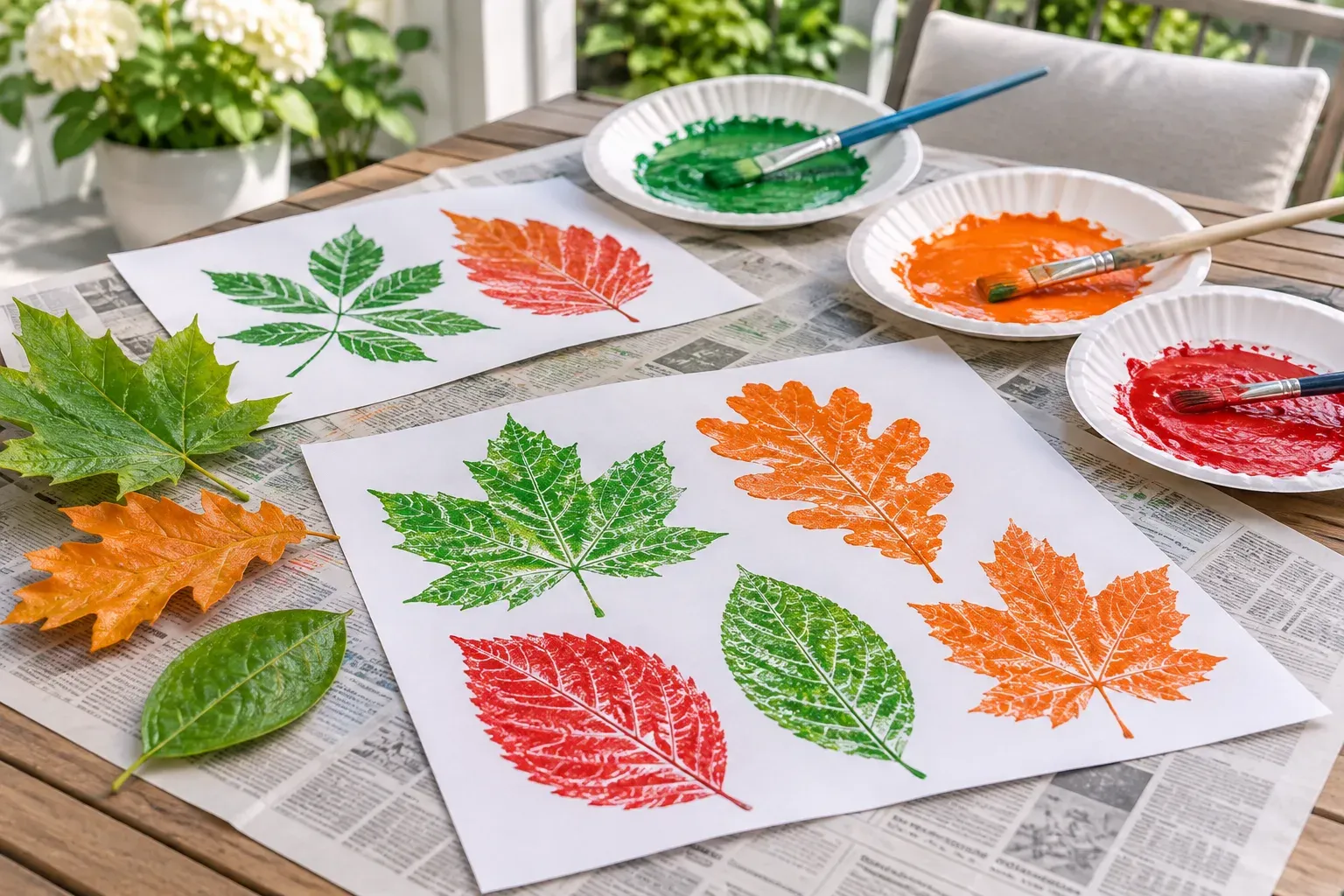
Brush paint onto the veiny back of a leaf, press it onto paper, and peel it away to reveal its print.
- Age
- 2 to 6 years
- Play time
- 20 min
- Set-up
- 10 min prep
- Where
- Indoors or outdoors
- Who
- Any number of kids
- Clean-up
- Medium mess
Leaves that looked plain on the footpath turn out to have whole road maps on their backs. Children are genuinely surprised by how detailed the prints come out, especially from big, veiny leaves. It pairs well with a walk, so the collecting becomes part of the job. Expect a few blotchy prints from too much paint before they find the right amount. A two-year-old will smear, and that is fine; the prints still look like leaves.
How to play
-
Go on a short walk to collect a handful of fresh, flat leaves of different shapes and sizes. Fresh ones print far better than dry, crunchy ones.
-
Spread newspaper over the table, put a few colours of paint on paper plates, and lay out sheets of plain paper.
-
Show your child how to turn a leaf over and brush paint thinly over the bumpy back, where the veins stand out.
-
Lay the leaf paint side down on the paper, cover it with a sheet of paper towel and press all over with a flat palm, then peel it off by the stalk.
-
Let them make prints in different colours, overlapping them into an autumn pile, a tree or a border round the page.
What you need
- fresh leaves
- poster paint
- paintbrushes
- paper plates
- paper
- newspaper
- paper towel
Don't have it?
- No poster paint? A washable ink stamp pad gives fine prints from small leaves.
- No paper towel? A sheet of scrap paper laid on top does the same job.
Stay close
Collect only leaves you recognise as harmless, skipping anything with sap, berries or thorns, and wash hands after the walk and after painting.
What they are practising
- fine motor. Brushing paint on thinly and peeling a leaf away by its stalk take a light, careful touch.
- sensory exploration. Running a fingertip over the bumpy veins, then seeing the same lines appear on paper, links what they feel with what they see.
- colours. Choosing red, orange and yellow for an autumn pile gets them naming colours and noticing where prints overlap.
Make it easier
For a two-year-old, paint the leaf yourself and let them do the pressing and the peeling, which is the exciting part.
Make it harder
Older children can sort the leaves by shape first, print one of each, then try to match every leaf to its print.
Parents ask
- Which leaves print best?
- Fresh, flat leaves with raised veins on the back, such as many garden shrubs and street trees. Thick, glossy leaves and pine needles give blurry prints.
- Can I keep the leaves for another day?
- In a sealed bag in the fridge they stay usable for a couple of days. After that they curl and dry out.
- What if my toddler puts a leaf in their mouth?
- Take it out and check what it was. That is the reason to collect only leaves you know and leave unfamiliar plants alone.
Find more like this
2 year olds3 year olds4 year olds5 year oldsIndoorsOutdoorsArtWith paintWith paper