Games
Home-made picture bingo
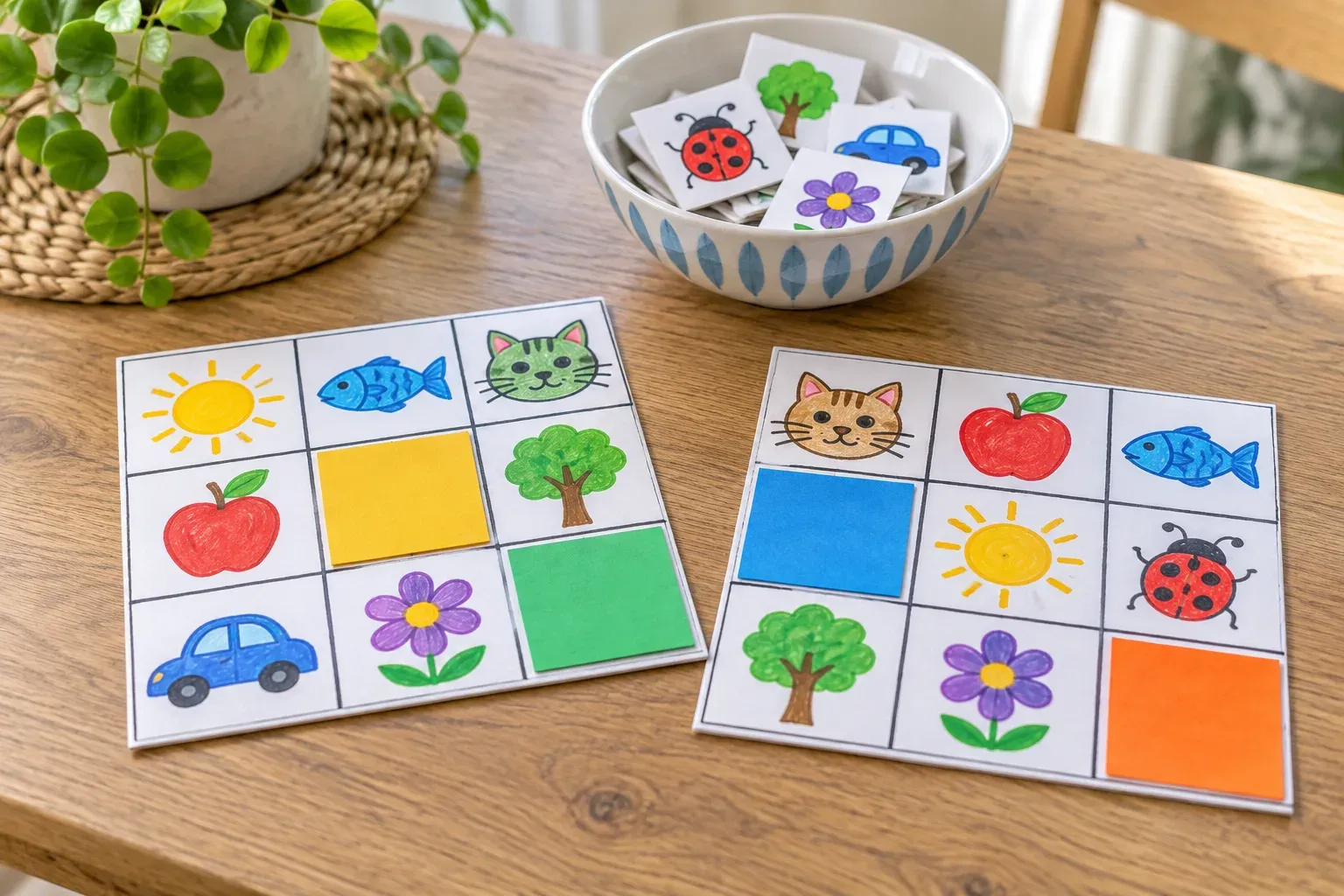
Draw bingo boards of simple pictures, call matching cards from a bag, and cover each picture until someone fills a row.
- Age
- 3 to 6 years
- Play time
- 20 min
- Set-up
- 25 min prep
- Where
- Indoors
- Who
- Two or more kids
- Clean-up
- Low mess
Shop-bought bingo is fine, but a set you draw yourselves at the kitchen table gets far more use, mostly because your child chose the pictures. Rough drawings are completely fine as long as each one is clear, so a cat should look like nothing else on the board. Making the set takes about half an hour and can be its own afternoon. The game itself is short and repeats well, and everyone will want a turn as the caller.
How to play
-
Cut card into boards about the size of a postcard, one per player, and rule each into a grid of nine squares, three by three.
-
Choose about twelve simple pictures, such as a sun, cat, apple, car, house, fish, tree, ball and boat. Draw a different mix of nine on each board so no two boards match.
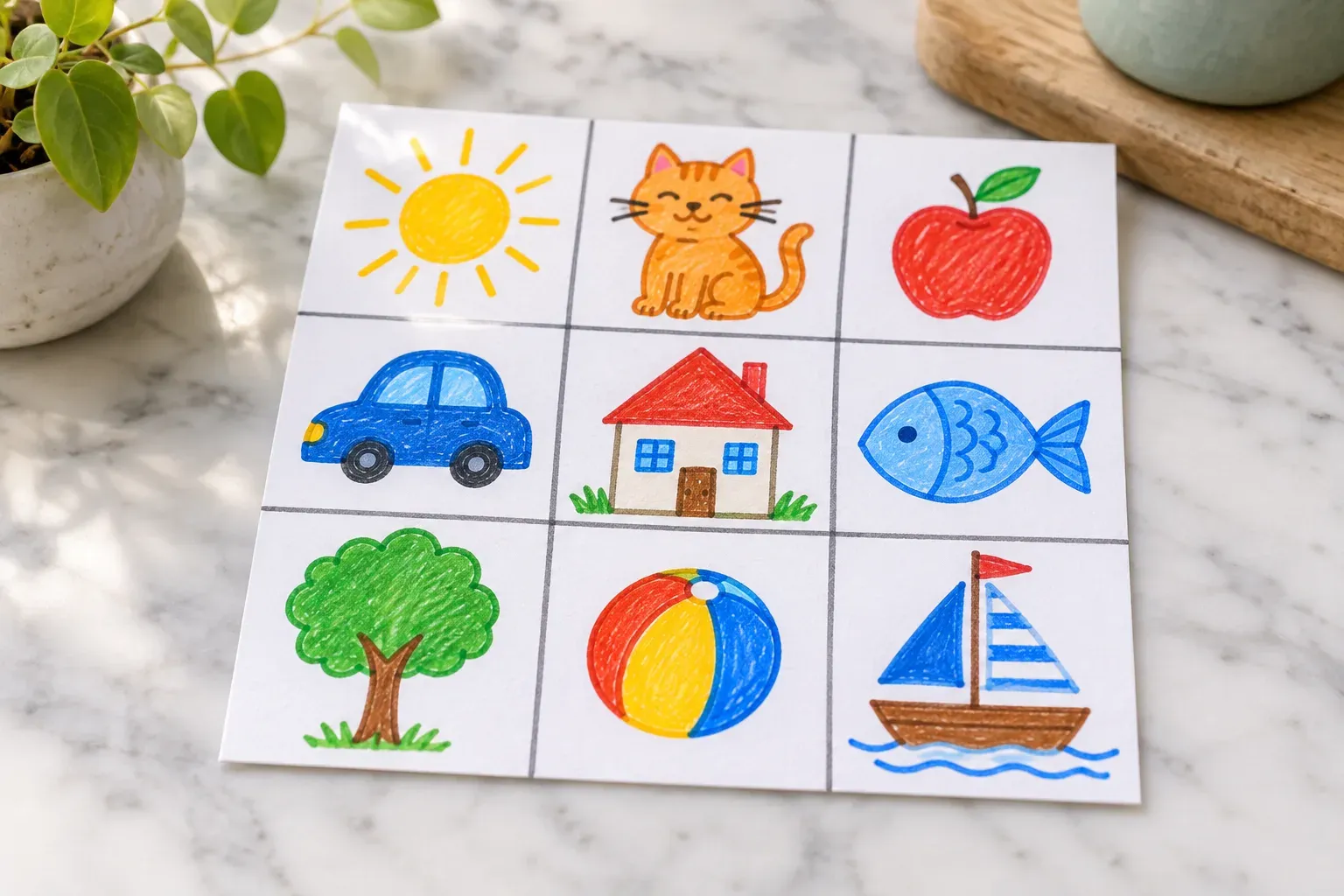
Nine pictures per board, a different mix on each. -
Draw each of the twelve pictures again on small squares of card to make the calling cards, and put them in a bag or bowl.
-
Cut coloured paper into squares a little smaller than the grid boxes to use as counters, and give each player a board and a pile.
-
Pull out a card, show it and say what it is. Anyone with that picture covers it with a counter.
-
The first to cover a whole row calls 'bingo'. Put the cards back, shuffle and play again, letting your child take a turn as caller.
What you need
- card
- ruler
- felt pens
- scissors
- coloured paper
- bag or bowl
Don't have it?
- No card? Cut the side panels from a cereal box and draw on the plain side.
- No coloured paper? Torn scraps of newspaper or old envelopes cover the squares just as well.
Stay close
Paper counters are safer than small plastic ones if a baby or toddler is anywhere nearby.
What they are practising
- language. Naming each picture as it is called, then finding it on the board, ties the word to the drawing.
- problem solving. Scanning the grid to check whether a picture is there takes careful looking.
- turn taking. Waiting for each card and passing the caller job around keeps the game fair.
Make it easier
For a three-year-old, use a board of four big pictures, and hold each calling card up next to their board so they can compare.
Make it harder
A six-year-old can draw a full board themselves, or play a version where the caller describes the picture, such as 'it purrs', without showing it.
Parents ask
- How do I stop everyone winning at once?
- Give every board a different mix of pictures, with each picture appearing on only some boards. With twelve pictures and nine squares, this happens naturally if you shuffle which ones you leave out.
- My three-year-old gets upset when someone else wins. Any ideas?
- Play to fill the whole board instead, and let everyone keep going until all boards are full. The first to finish simply gets to call the next game.
- How do I store the set?
- Keep the boards, calling cards and counters together in a zip-lock bag or a large envelope. Card boards last for months, and you can draw new pictures to add over time.
Find more like this
3 year olds4 year olds5 year oldsIndoorsLow messTwo or more kidsGamesWith paper