Art
First watercolours
Wet a paint box, dip a chunky brush and let blues and yellows run together on thick paper taped to the table.
- Age
- 2 to 6 years
- Play time
- 20 min
- Set-up
- 5 min prep
- Where
- Indoors
- Who
- Any number of kids
- Clean-up
- Medium mess
Quieter than poster paint and easier to clean up, watercolours tend to look lovely almost by accident. Small children often scrub one spot until the paper goes soft and then announce they have finished, so thicker paper is worth having. Set it up on a rainy afternoon when you can sit nearby with a cup of tea. The water jar will turn the colour of a puddle within minutes, and nobody needs to mind.
How to play
-
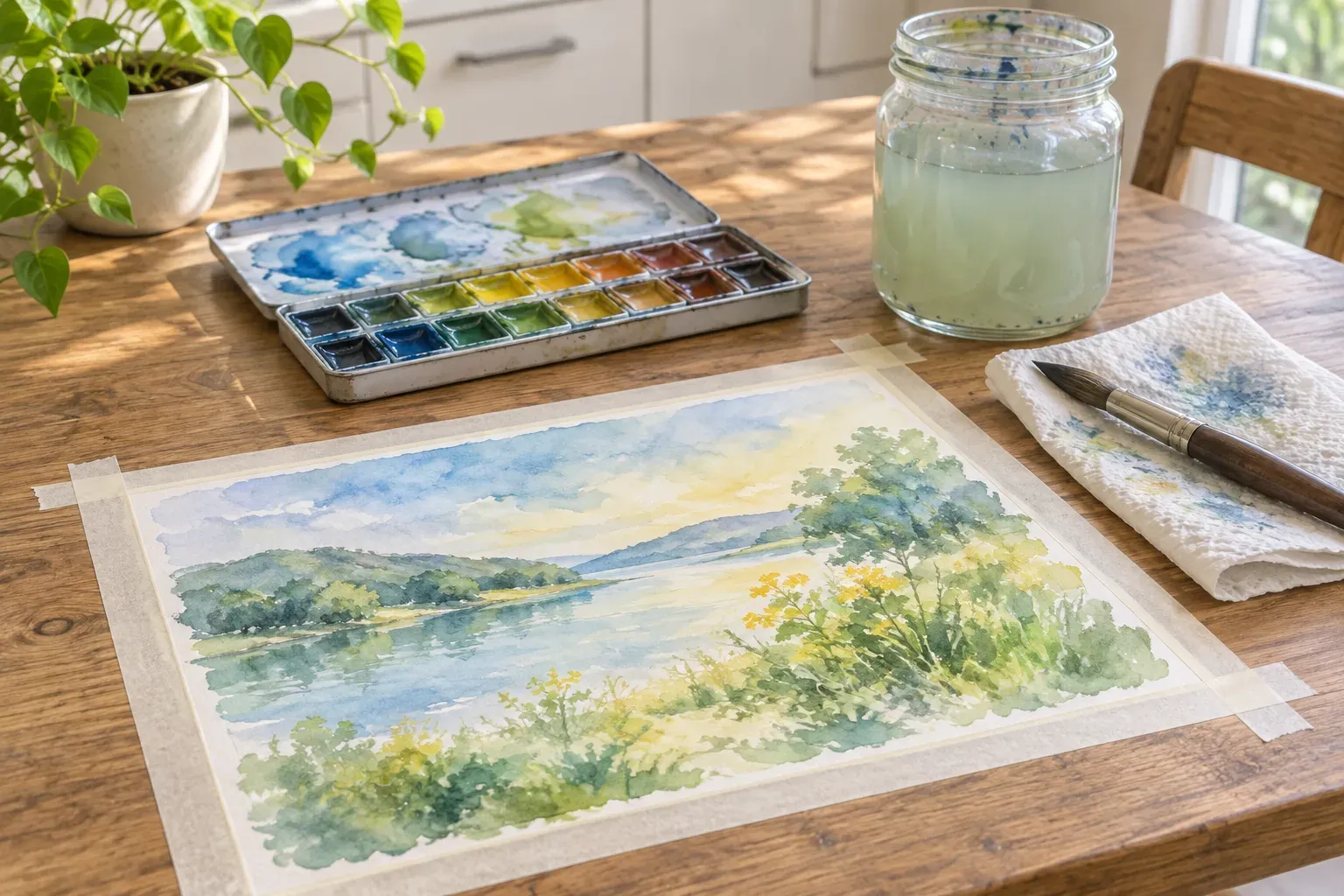
Cover the table with newspaper if it stains, then tape a sheet of thick paper down at the corners with masking tape so it does not slide or curl.
-
Half-fill a heavy, wide jar with water so it is harder to knock over, and fold a paper towel beside it.
-
Drip a few drops of water onto each colour in the paint box a minute before you start, so the paint is soft and ready.
-
Show your child the routine: dip the brush in water, swirl it on a colour, paint, then rinse and dab it on the towel before the next colour.
-
Let them paint however they like. Colours running together and puddles on the page are all part of it.
-
To stretch it, drop a blob of clean water on the paper and touch a loaded brush to the edge, so the colour blooms outwards.
-
Leave the painting flat to dry, and leave the paint box open to dry too so it does not go mouldy.
What you need
- watercolour paint box
- thick paper
- chunky paintbrush
- heavy wide jar
- water
- paper towel
- masking tape
- newspaper
- old shirt
Don't have it?
- No thick paper? Thin card from a cereal box, plain side up, holds the water far better than printer paper.
- No paint box? A few drops of food colouring in small cups of water paints in much the same way, though it can stain clothes.
Stay close
Watercolours are not food, so watch for brush-licking, and use a heavy, wide water jar so it is hard to tip.
What they are practising
- colours. Watching blue run into yellow on wet paper shows them a new colour forming without anyone explaining it.
- fine motor. Holding a brush and controlling how hard it presses takes steady wrist and finger work.
- creativity. There is nothing to copy, so every mark and colour choice is their own.
Make it easier
For a two-year-old, put out only two or three colours and a chunky brush, and be ready to change the water halfway through.
Make it harder
Show a five or six-year-old how to draw with a white wax crayon first and paint over it, so a hidden picture or their name appears through the colour.
Parents ask
- Why does the paper go bobbly and tear?
- Too much water, and scrubbing in one place. Thicker paper helps, and so does showing them how to dab the brush on the towel after rinsing.
- Will watercolour stain clothes?
- Children's sets usually wash out with a normal wash, but some colours linger on pale fabric. An old shirt worn back to front saves the worry.
- How do I stop the whole paint box turning brown?
- You cannot entirely, but rinsing between colours helps. Wipe the pans with a damp paper towel afterwards and they look nearly new again.
Find more like this
2 year olds3 year olds4 year olds5 year oldsIndoorsArtWith a cardboard boxWith tapeWith paintWith paper