Learning
First jigsaw puzzles
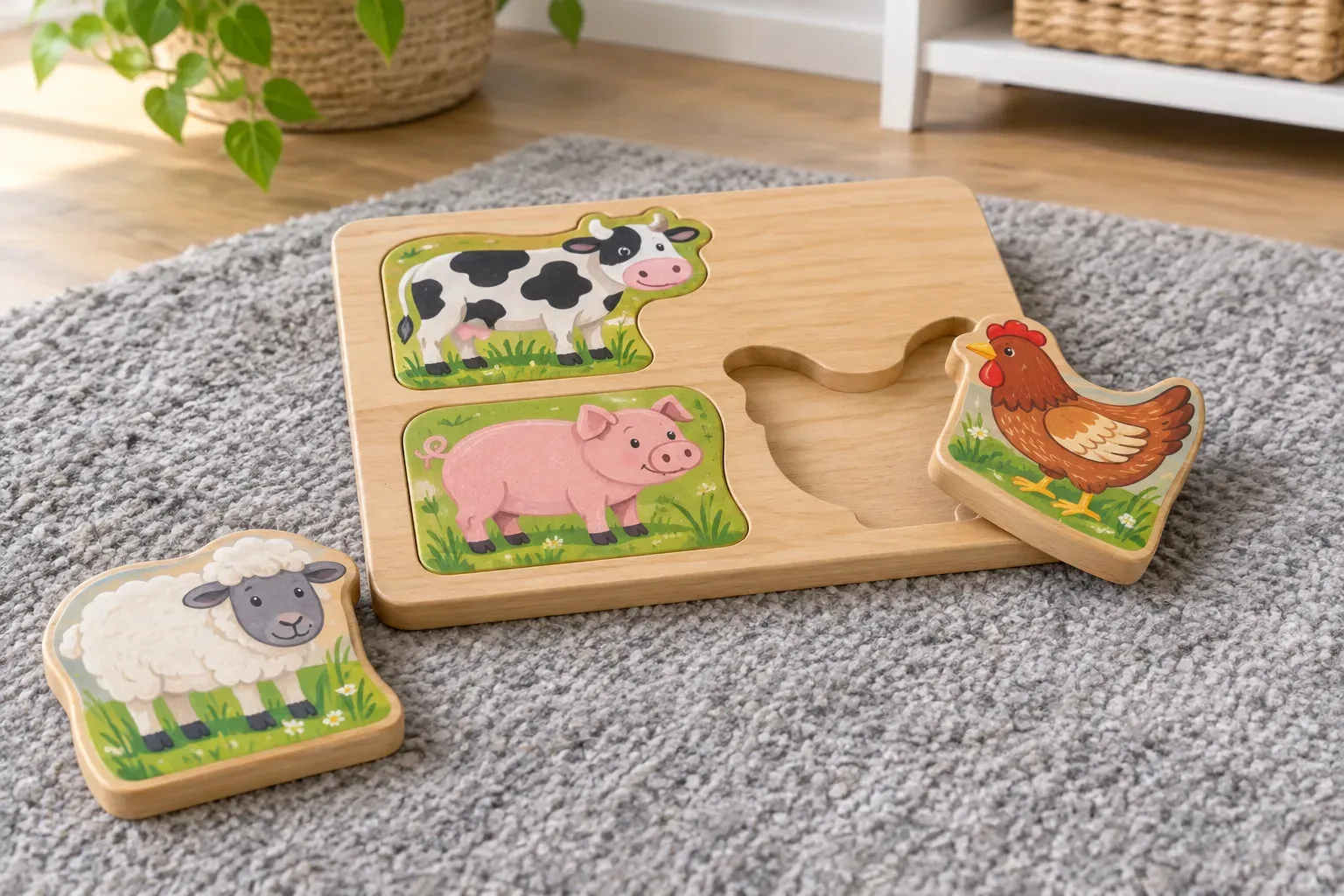
Take out the pieces of a simple wooden puzzle, name each picture, and turn each piece until it fits.
- Age
- 18 months to 3.5 years
- Play time
- 10 min
- Set-up
- No prep
- Where
- Indoors
- Who
- One child
- Clean-up
- Low mess
The first few goes usually involve a piece being mashed against the wrong hole with great determination, then handed to you. That is normal, and the turning-until-it-drops moment comes with repetition, so the same puzzle may come out daily for a fortnight. Ten quiet minutes on the rug after a nap suits it well. Keep the pieces in a bag or you will be one cow short by Friday.
Shops often sell these first puzzles as peg puzzles or inset puzzles.
How to play
-
Choose a simple wooden puzzle with two to six large pieces and set it on the floor or a low table.
-
Take the pieces out one at a time, naming each picture as you go.
-
Hand your child one piece and let them try it in the spaces, turning it until it fits.
-
If they get stuck, point to the right space or turn the piece partway, and let them finish the move.
-
Once a puzzle is easy, move to one with more pieces.
What you need
- simple wooden puzzle
Don't have it?
- No wooden puzzle? Glue a large picture from a cereal box onto thick card and cut it into two or three big pieces with straight cuts.
What they are practising
- problem solving. Your child tries a piece in one space, finds it does not fit, and has to turn it or pick another space.
- fine motor. Gripping a chunky piece and rotating it at the wrist until it drops into its hole takes a controlled hand.
- language. The name of each picture is said as the piece comes out and again as it goes back in.
Make it easier
Use a puzzle with two or three chunky knobbed pieces and take out only one at a time, so there is just one gap to aim for.
Make it harder
Move to a simple interlocking jigsaw of six to twelve pieces and show how to find the corners and edges first.
Parents ask
- My child gets cross and throws the pieces. What then?
- Take out all but one piece so there is a quick win, turn it most of the way yourself and let them drop it in. If the mood has gone, put it away without comment and try tomorrow.
- They can do it in seconds now. Is it time for a new one?
- Probably, but keep the old one around, as children like returning to something they have mastered. You can also tip two easy puzzles into one pile to make a harder sort.
- How do I stop pieces going missing?
- Store each puzzle in its own zip bag or shallow box, and make the last piece going in the signal that it goes back on the shelf.
Find more like this
1 year olds2 year olds3 year oldsIndoors10 minutes or lessNo prepLow messLearning