Learning
Sink or float
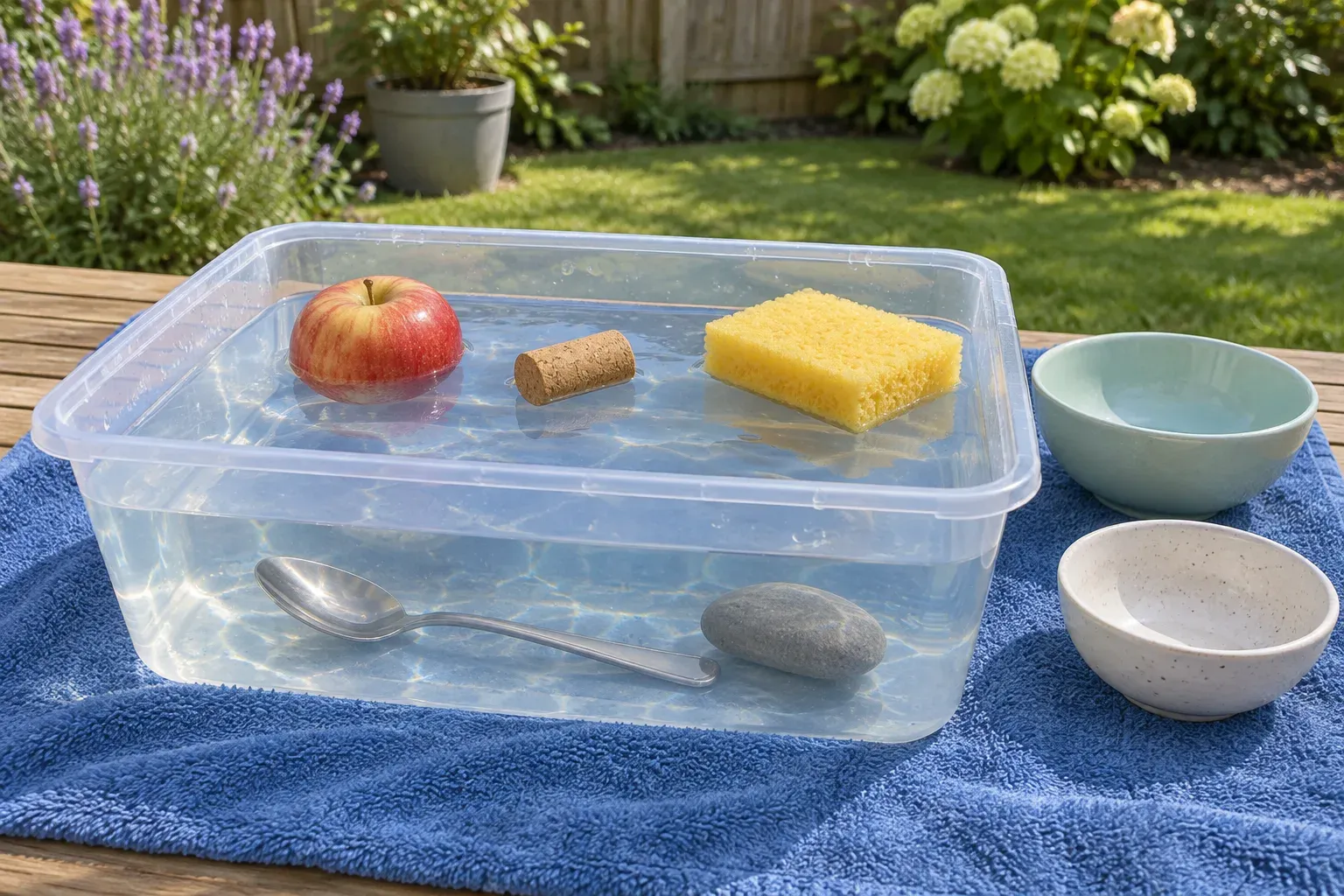
Guess whether everyday objects will sink or float, then drop each one into a tub of water to check.
- Age
- 3 to 6 years
- Play time
- 25 min
- Set-up
- 10 min prep
- Where
- Indoors or outdoors
- Who
- Any number of kids
- Clean-up
- Medium mess
Ask a four-year-old whether an apple will sink and you will get an answer delivered with total confidence. Then it floats, and the look on their face is worth the wet floor. Gather a pile of bits from around the house and test them in a washing-up bowl, a storage tub or the garden paddling pool. Some guesses stay wrong even after testing, because a big apple bobbing about is genuinely confusing. Let them stay puzzled.
How to play
-
Put a towel down and fill a large tub about halfway with water.
-
Gather eight to ten objects, such as a cork, a metal spoon, an apple, a stone, a leaf, a sponge and a plastic toy.
-
Hold up each one and ask your child to guess whether it will sink or float, then let them drop it in.
-
Afterwards, sort the objects into two bowls, one marked with a drawn wave for float and one with a drawn stone for sink.
-
To stretch it, try to make a sinker float, perhaps by resting the stone in a plastic lid, or a floater sink by filling a cup with water.
-
Tip the water onto the garden as soon as you finish.
What you need
- large tub
- water
- towel
- cork
- metal spoon
- apple
- stone
- leaf
- sponge
- plastic toy
- two bowls
- paper and pen
Don't have it?
- No big tub? Use the bath with a few centimetres of water and stay right beside it.
- No cork? A plastic bottle lid, a wooden spoon or a ping-pong ball floats well.
Stay close
Stay with them by the water and empty the tub straight after play. If younger siblings are around, leave out anything small enough to swallow.
What they are practising
- problem solving. Making a guess, testing it and noticing when they were wrong is the whole cycle of an experiment.
- language. Saying sink and float and explaining why gives them words for what they see.
Make it easier
For a three-year-old, keep to five objects and simply drop them in one by one, saying sink or float out loud together.
Make it harder
A five or six-year-old can draw a two-column chart, mark their guess first, then tick or cross after each test.
Parents ask
- Why does a big apple float while a small key sinks?
- Floating depends on how heavy something is for its size, not just how heavy it is. For a young child, it is light for how big it is covers it.
- Which objects give the best surprises?
- An apple, a big wooden block and an empty plastic bottle float, while a small metal key and a pebble sink. A ball of play dough sinks but often floats once shaped into a flat boat.
- Do I need to write anything down?
- No. Sorting into two bowls works for younger children, and a chart is only for those who want one.
Find more like this
3 year olds4 year olds5 year oldsIndoorsOutdoorsLearningWith paperWith sponges