Learning
Counters onto number cards
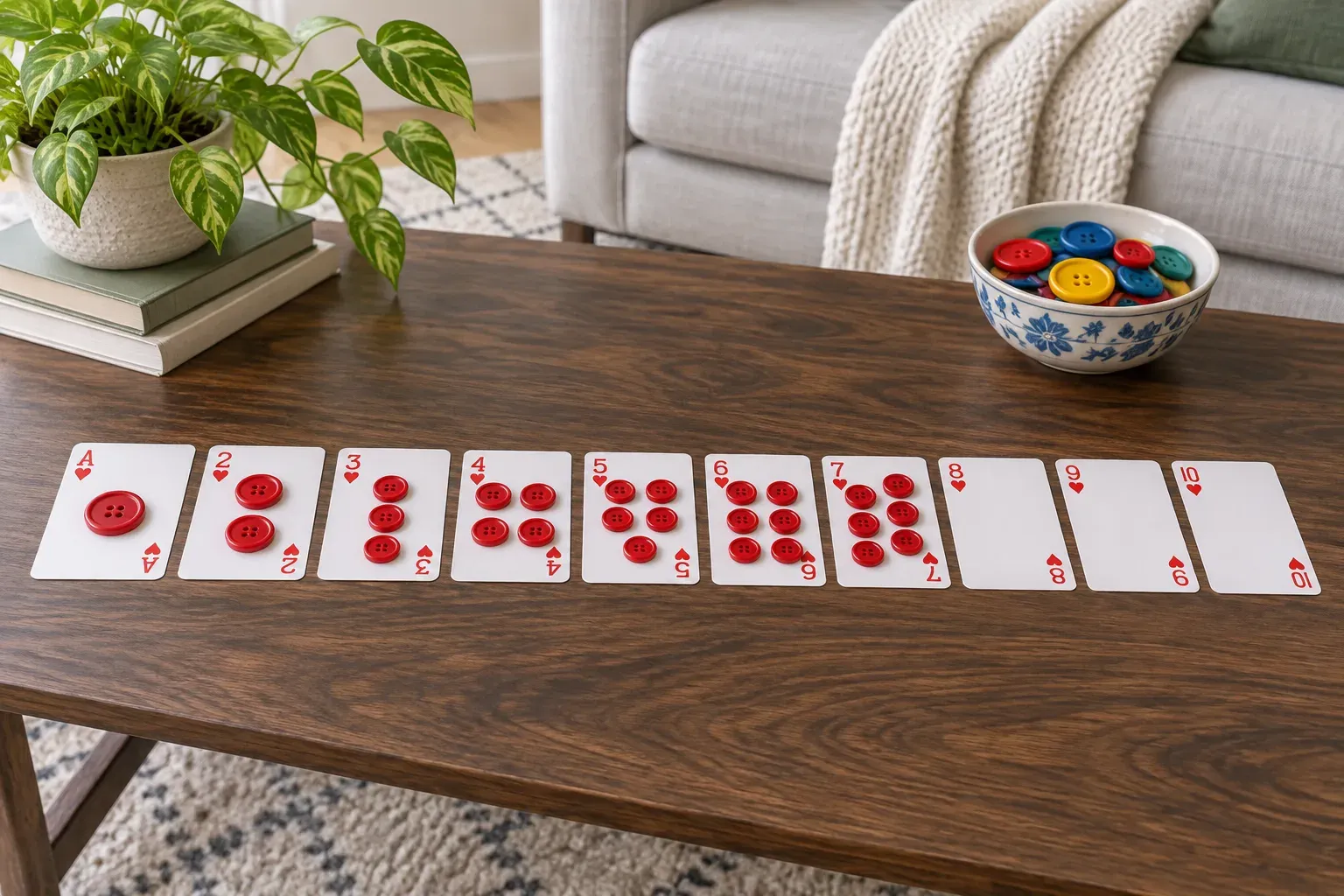
Lay out number cards from ace to ten, then place the right number of buttons or pasta pieces on each one.
- Age
- 3 to 5 years
- Play time
- 15 min
- Set-up
- 2 min prep
- Where
- Indoors
- Who
- One child
- Clean-up
- Low mess
A pack of cards and a pile of pasta make a decent quiet table job for a child who has started counting things aloud. The low cards go quickly; somewhere around seven, fingers lose track and counters get counted twice. That is normal and worth letting them sort out. Try it after lunch when everyone is calm. Fifty-five pieces of anything will not stay on the table, so do it somewhere easy to sweep.
How to play
-
Take the ace to ten of one suit from a pack and lay them out in order on the floor or table, with the ace as one.
-
Point to each card and say the number together. Count the symbols on the card if that helps.
-
Put a pile of at least 55 buttons, pasta pieces or blocks beside your child, enough to fill every card.
-
Do the first card or two together, placing one counter on the ace and two on the two.
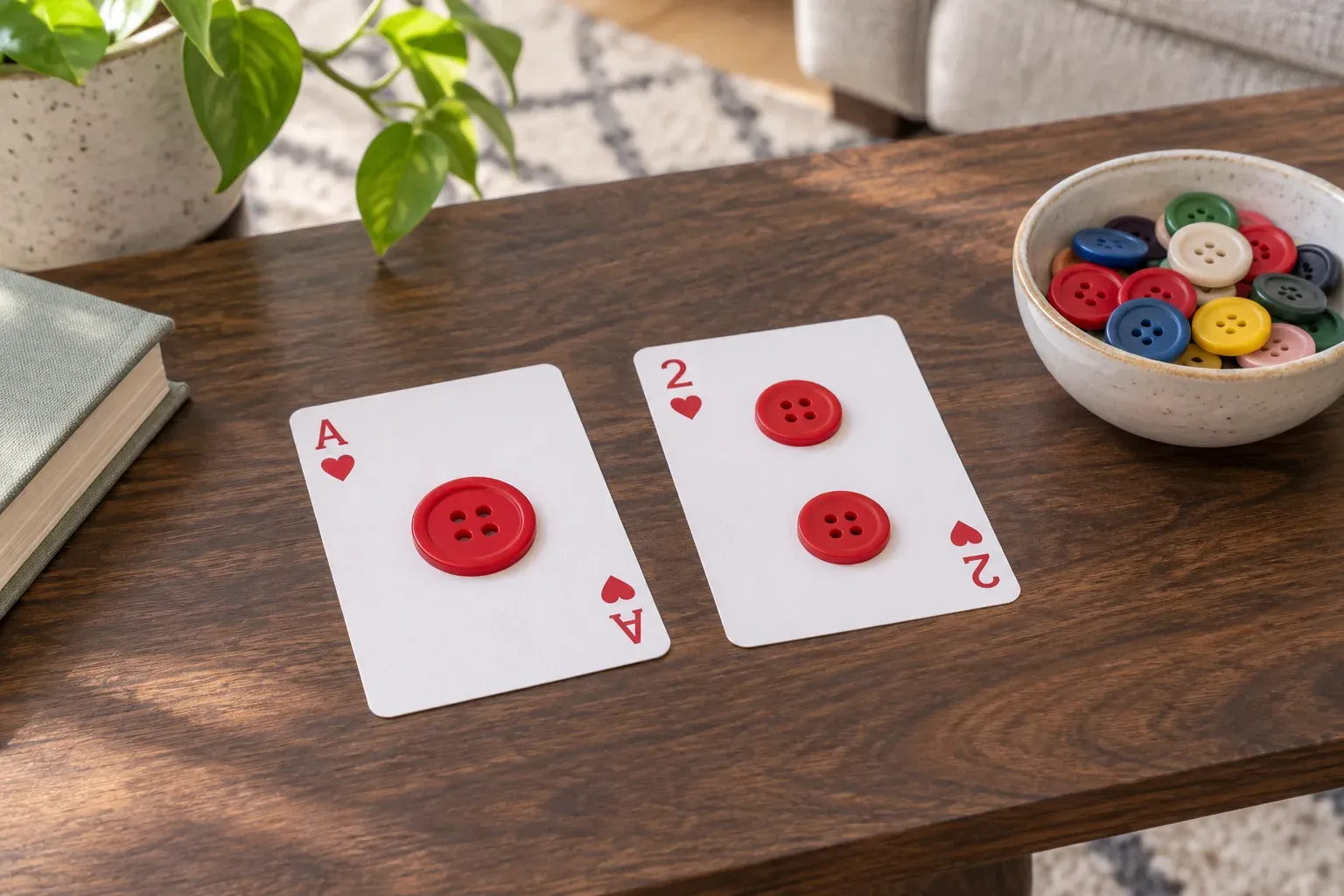
Start together with one button and then two -
Let them place the matching amount on each remaining card, counting aloud as they go.
-
To make it easier, use only ace to five. To make it harder, shuffle the cards so they are out of order.
What you need
- playing cards ace to ten
- buttons, pasta or blocks
Don't have it?
- No playing cards? Write 1 to 10 on squares of paper and draw the matching number of dots on each.
- No buttons? Clothes pegs or dried pasta tubes are easy to count and hard to lose.
Stay close
Use large counters for children who still mouth objects.
What they are practising
- counting. Reading the number on a card and putting out exactly that many pieces, one for each number said, ties the numeral to an amount.
- fine motor. Picking up small counters one at a time and placing them on a card uses a thumb-and-finger pinch.
Make it easier
Use ace to three only and big blocks as counters, and let a three-year-old put one block on each symbol printed on the card.
Make it harder
Turn the cards face down and have a five-year-old flip one and build that number. Ask how many more the six needs to match the eight.
Parents ask
- Why does it need 55 counters?
- One plus two plus three, all the way up to ten, comes to 55. If you have fewer, stop at the card you can fill; ace to six needs only 21.
- My child counts 'one, two, three, five, eight'. Do I correct it?
- Count along with them, touching each counter as you say its number, without making a point of the slip. Stick to the lower cards until the order is steady.
- What counters are safe if a toddler is around?
- Large blocks or big pasta shapes, nothing button-sized. Do it up at a table, count the pieces back into their tub, and check the floor.
Find more like this
3 year olds4 year olds5 year oldsIndoorsLow messLearningWith blocks