Games
Clue-based nature hunt
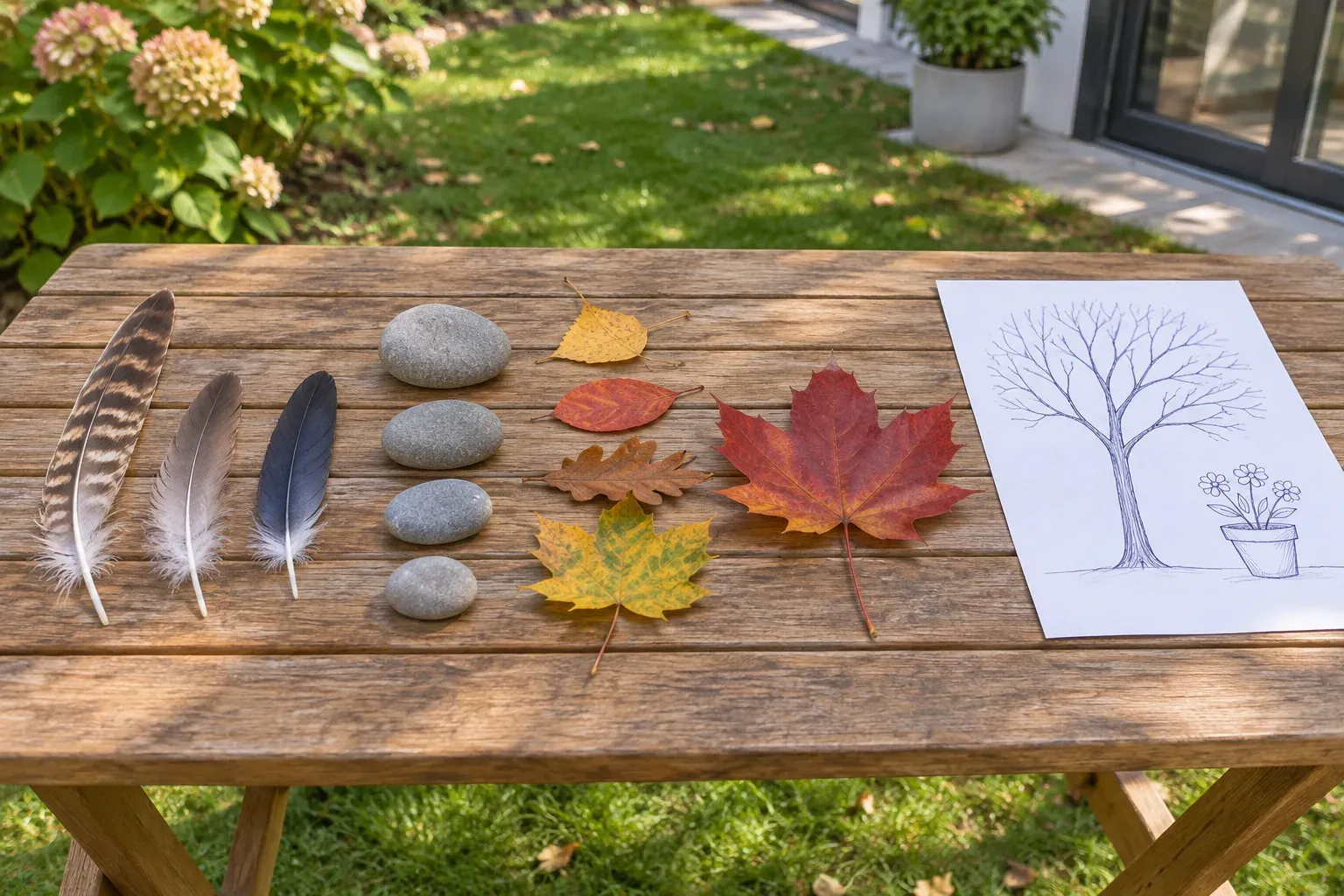
Hide feathers, stones and leaves around the garden, then follow spoken or drawn clues to find each one.
- Age
- 3 to 6 years
- Play time
- 20 min
- Set-up
- 10 min prep
- Where
- Outdoors
- Who
- Any number of kids
- Clean-up
- Low mess
"Try near something prickly" will send a four-year-old sprinting to the wrong bush with total confidence, which is most of the entertainment. Setting it up takes five minutes while the children are indoors finding shoes. It works best on a dry day with two or three children who can argue about the clues together. Someone will find a stone that is not one of yours and insist it counts. Let it.
This is a simple treasure hunt, and the garden is what American readers would call the yard.
How to play
-
While the children are not looking, hide five or six feathers, smooth stones and leaves around the garden at their eye level or lower. Remember where each one is.
-
Prepare a clue for each hiding place. Either say it aloud, such as "look under something green", or draw the spot on a piece of paper.
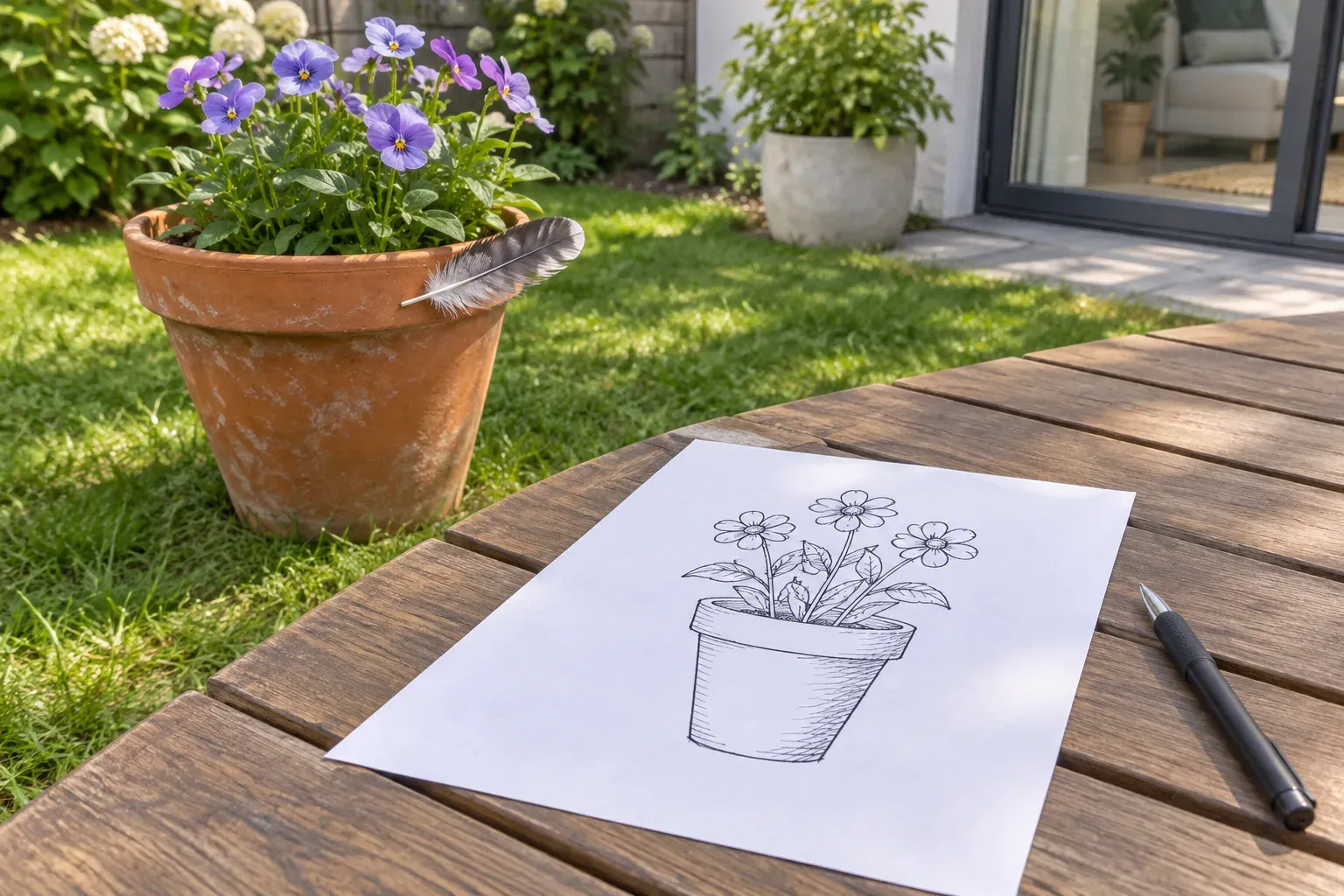
A quick sketch of the spot works for non-readers -
Gather the children and give them one clue at a time.
-
Let them search together, and give hints of warmer or colder if they get stuck.
-
When everything is found, lay the finds out and compare them: the biggest leaf, the smoothest stone, the longest feather.
-
For another round, let the children hide the objects and give you the clues. Wash hands afterwards.
What you need
- feathers
- smooth stones
- leaves
- paper
- pen
Don't have it?
- No feathers? Pine cones or big seed pods are just as findable.
- No smooth stones? Use sticks, or shells left over from a beach trip.
- No paper and pen? Say every clue aloud, or show a photo of each hiding place on your phone.
What they are practising
- problem solving. Each clue has to be turned into a place to look, then checked and rethought if nothing is there.
- language. Following clues with words like under, behind and beside, and later making up their own, puts position words to work.
- turn taking. Searching as a group and swapping the hider's job means waiting for a clue and letting someone else find one.
Make it easier
For a three-year-old, hide things in plain view and give clues that point to one obvious place, such as the slide or the back step. A drawing of the spot is easier than a spoken riddle.
Make it harder
Give a six-year-old two-part clues, such as near something you sit on and behind something that holds water, or write simple ones for them to read. Let them set the next round and judge if their own clues were fair.
Parents ask
- I forgot where I hid one. Now what?
- It happens to everyone. Turn it into a group search, with choosing the next hiding place as the prize, and next time snap a quick photo of each spot.
- Are feathers clean enough to handle?
- Bought craft feathers are the easy answer. If you use found ones, pick clean, dry ones, keep them away from mouths, and wash hands afterwards as the steps say.
- The older child finds everything before the younger one gets a look in. How do I even it up?
- Give alternate clues, each addressed to one child by name, and make the older one's harder. Or pair them up, with the older one allowed only to say warmer or colder.
Find more like this
3 year olds4 year olds5 year oldsOutdoorsLow messGamesWith paper