Building
Bridge building
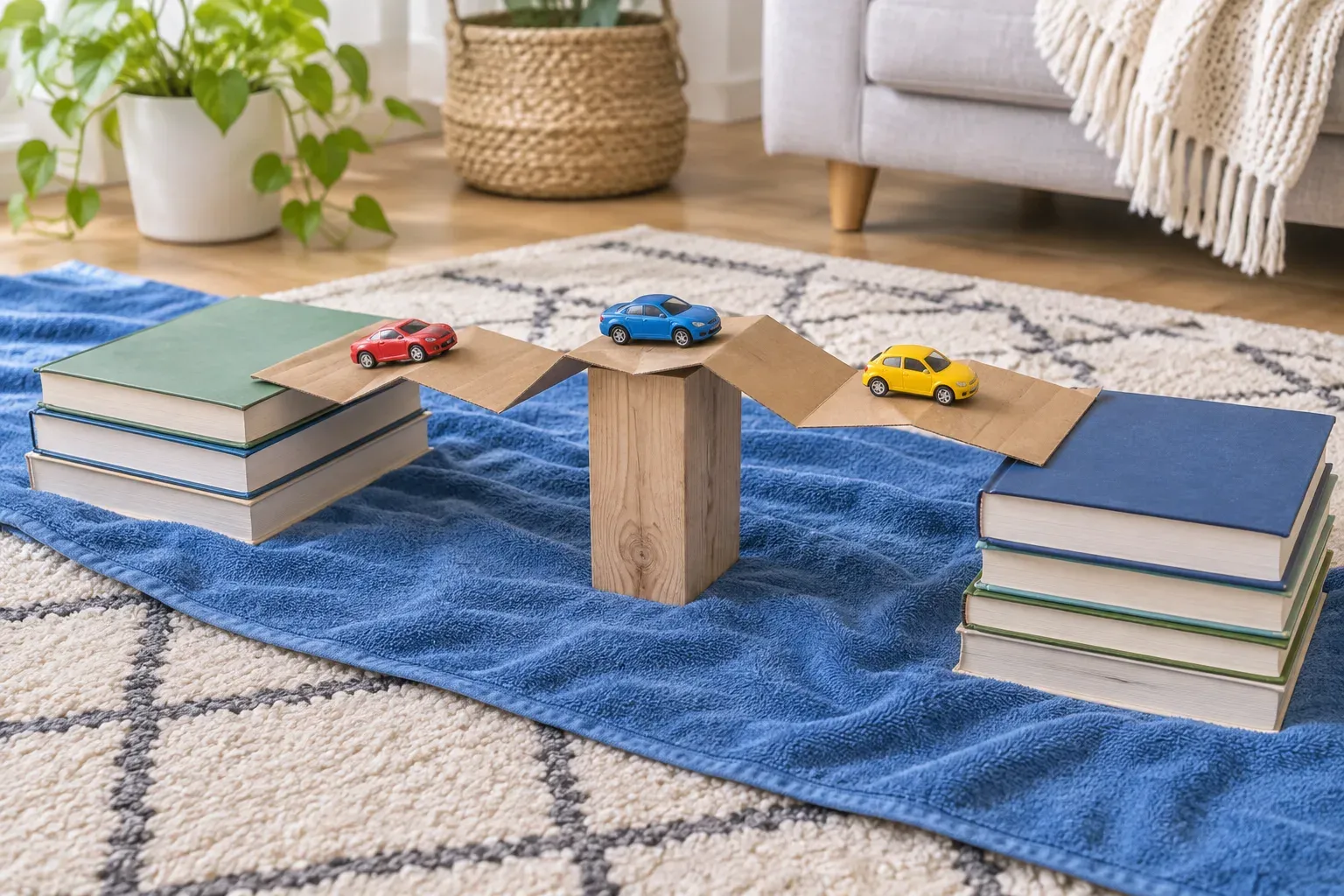
Lay a blue towel river between stacks of books, then build bridges from card and blocks for toy cars to cross.
- Age
- 3 to 6 years
- Play time
- 30 min
- Set-up
- 5 min prep
- Where
- Indoors
- Who
- Any number of kids
- Clean-up
- Low mess
Once a toy car needs to cross a river, every book on the shelf becomes building material. Three-year-olds mostly lay something flat across and drive over it with great ceremony, while older children start testing what holds the most. It suits a rainy afternoon and takes over the living room floor within minutes. The best bridges tend to be ugly and wildly over-built, which real engineers would quietly approve of.
How to play
-
Lay a blue towel or scarf on the floor as a river about 20 cm wide, and stack two or three books on each side as the banks.
-
Cut a few strips of card from a cereal box, a little longer than the gap, and set out blocks and toy cars.
-
Ask your child to get a car from one bank to the other without it falling in the water.
-
When a flat strip sags under a car, show how folding the card into a zigzag, or adding a block in the middle as a pillar, makes it stronger.
-
Widen the river, then test each new bridge by adding cars or blocks one at a time and counting how many it holds.
-
To stretch it, build a bridge from blocks only, or make a long one across a wide river with three pillars.
What you need
Don't have it?
- No blue towel? Two lengths of string laid on the floor mark the riverbanks.
- No toy cars? A block or a small soft toy can be the traffic.
Stay close
Keep the scissors with you. If younger siblings join, put away any cars or blocks small enough to fit through a toilet-roll tube.
What they are practising
- problem solving. They work out why a bridge sags and try folding, stacking or adding pillars to fix it.
- counting. Counting how many cars or blocks a bridge holds before it gives way turns each design into a score.
- creativity. Each bridge looks different, and they choose the materials and shapes for every one.
Make it easier
For a three-year-old, keep the gap narrow, offer stiff cardboard and one big block, and let them drive across as many times as they like.
Make it harder
A six-year-old can test which design holds the most blocks, a flat strip, a zigzag or one with pillars, and draw a chart of the results.
Parents ask
- Should I show my child how to make a strong bridge?
- Let them try first and watch it sag, then offer one idea at a time. Folding the card into a zigzag is the trick that gets the biggest reaction.
- How long will it hold their interest?
- Anything from ten minutes to most of an afternoon. A new challenge, like a wider river, usually gives it a second wind.
- What about a younger sibling who wants to join?
- Give them big blocks and a large car to drive across a sturdy book bridge. Keep the small pieces at the older child's end.
Find more like this
3 year olds4 year olds5 year oldsIndoorsLow messBuildingWith a cardboard boxWith blocksWith toy carsWith scarvesWith books