Activities With Scarves
A light scarf drifts slowly enough for a one-year-old to catch, and it is long enough for a five-year-old to turn into a river, a costume or a wind sock. Here are five ideas, from peekaboo with a baby to bridge building and a breezy afternoon in the garden.
5 ideas
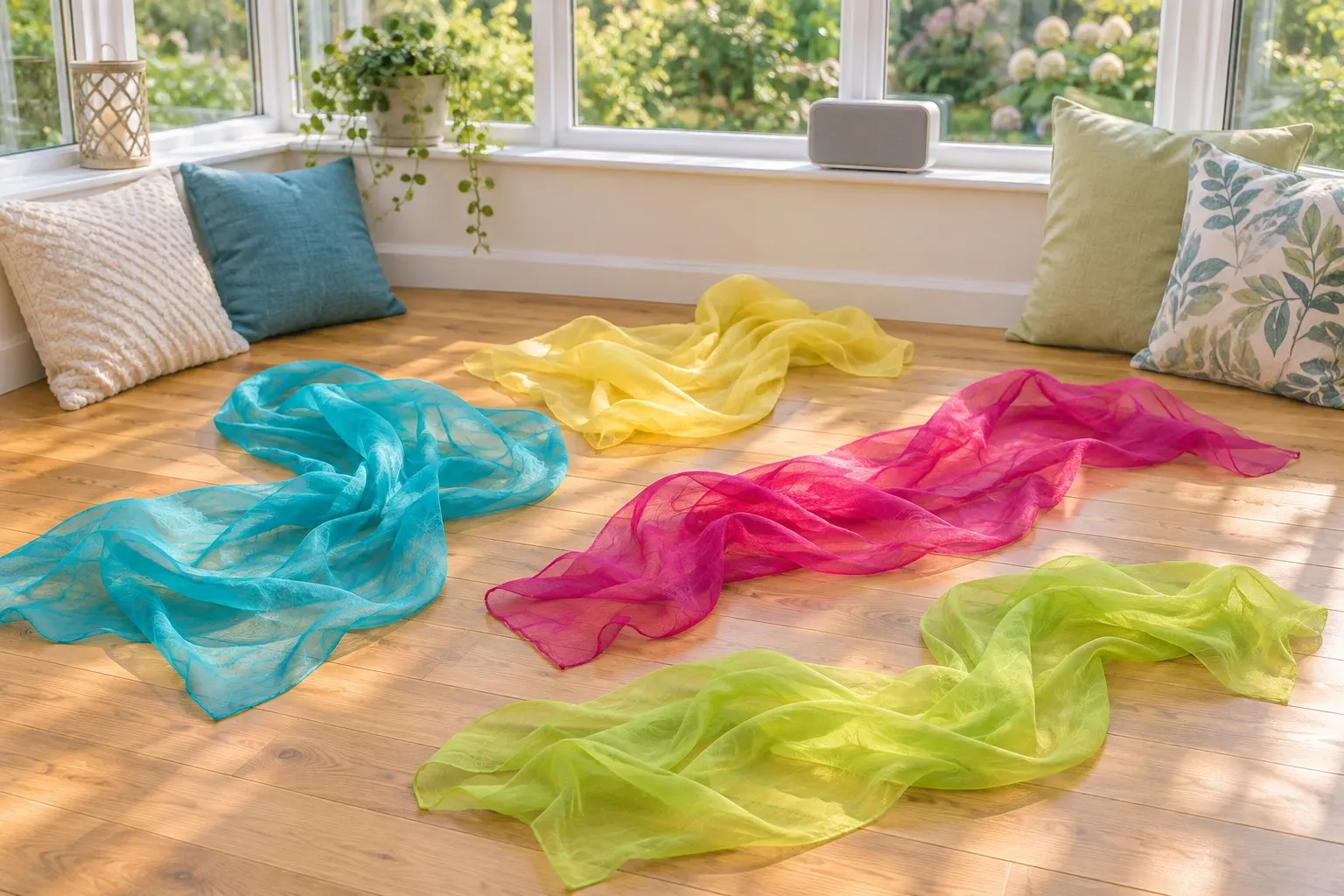 Music Scarf dancing Wave light scarves high, low, fast and slow to music with a clear beat, then float them down to a slow song.
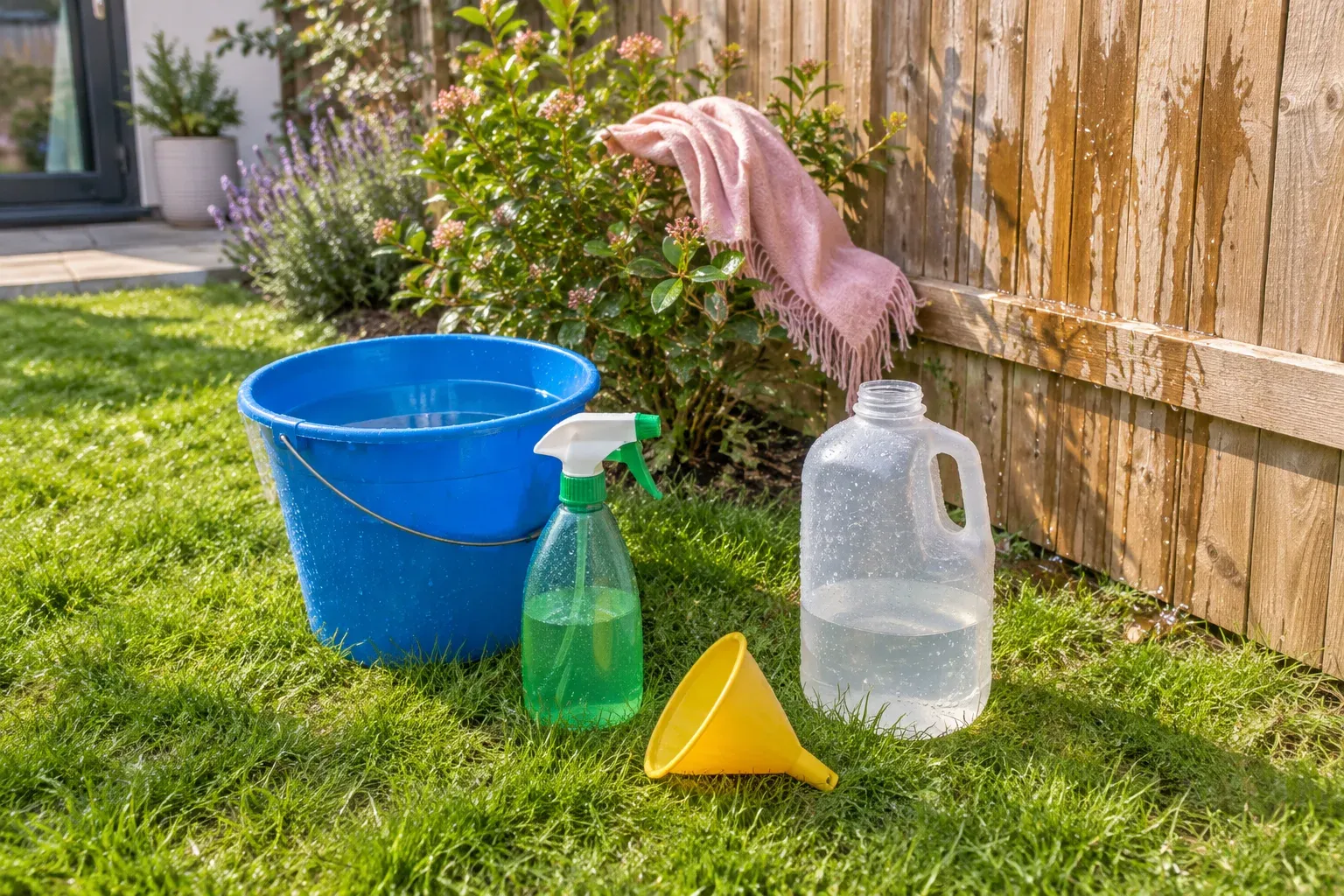 Water play Wind and water experiments Hold scarves up in the breeze, spray water down a fence, and pour through a funnel to compare speeds.
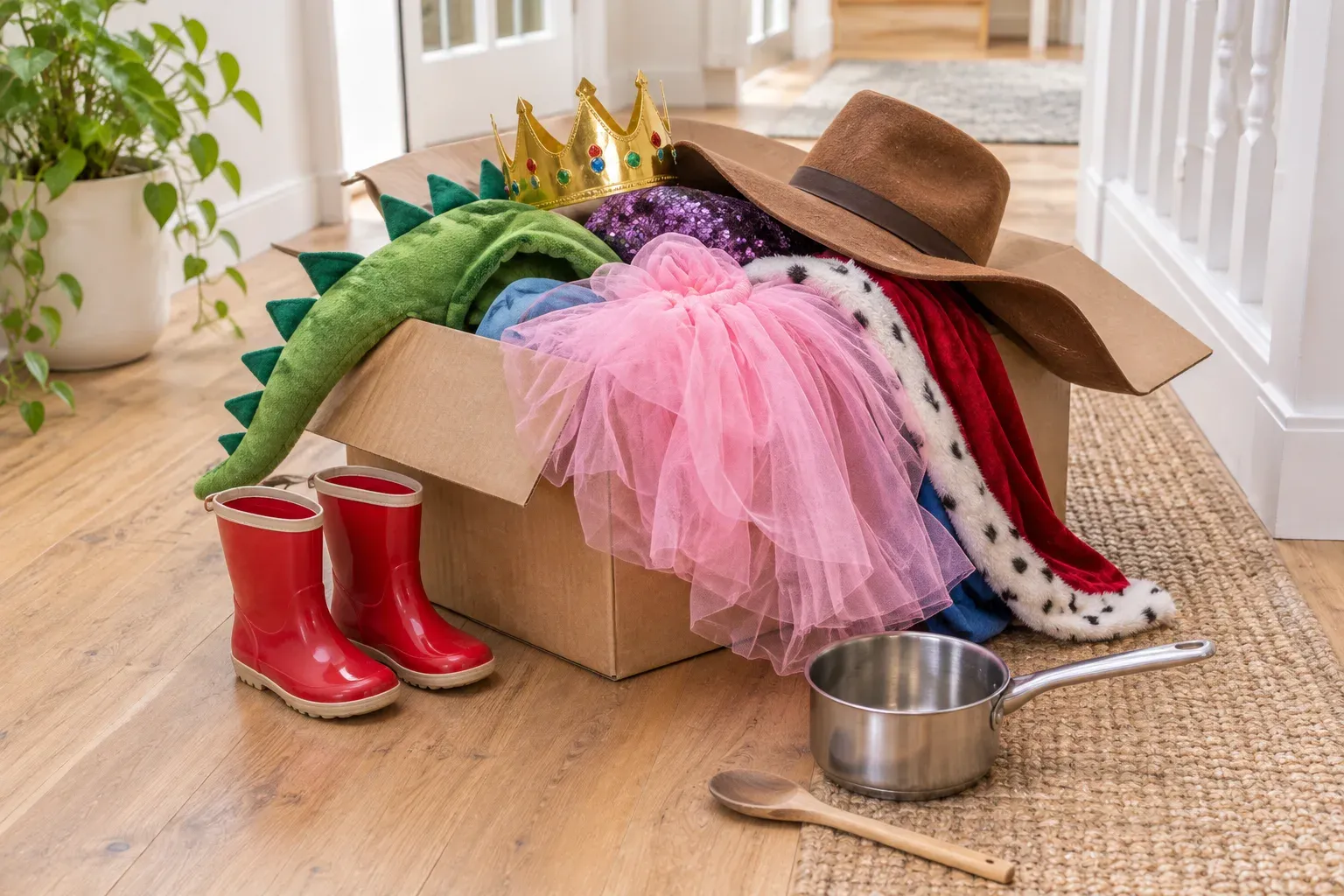 Pretend play Dress-up parade Dig out costumes, hats and old clothes, put together an outfit, then march in a parade round the house to music.
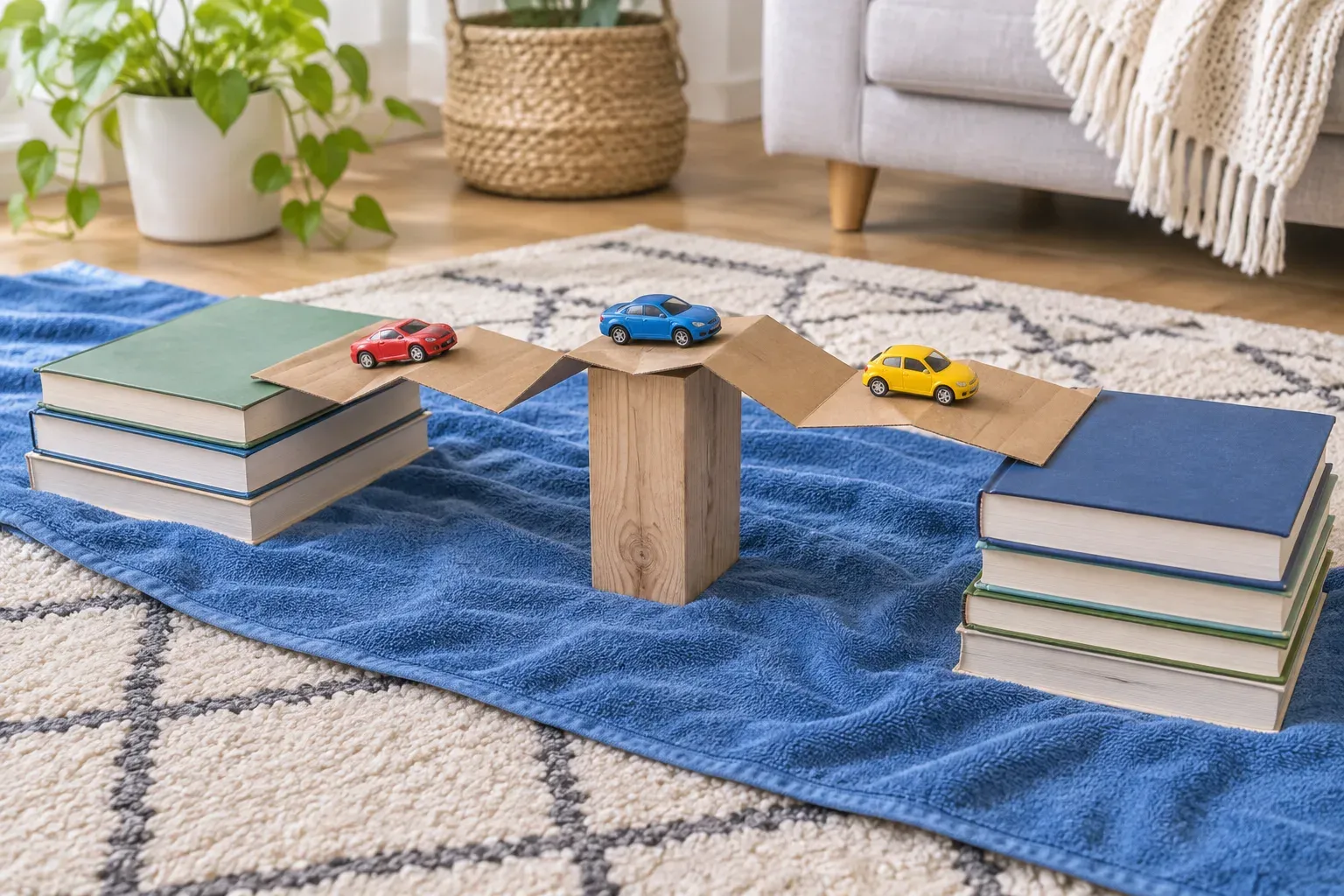 Building Bridge building Lay a blue towel river between stacks of books, then build bridges from card and blocks for toy cars to cross.
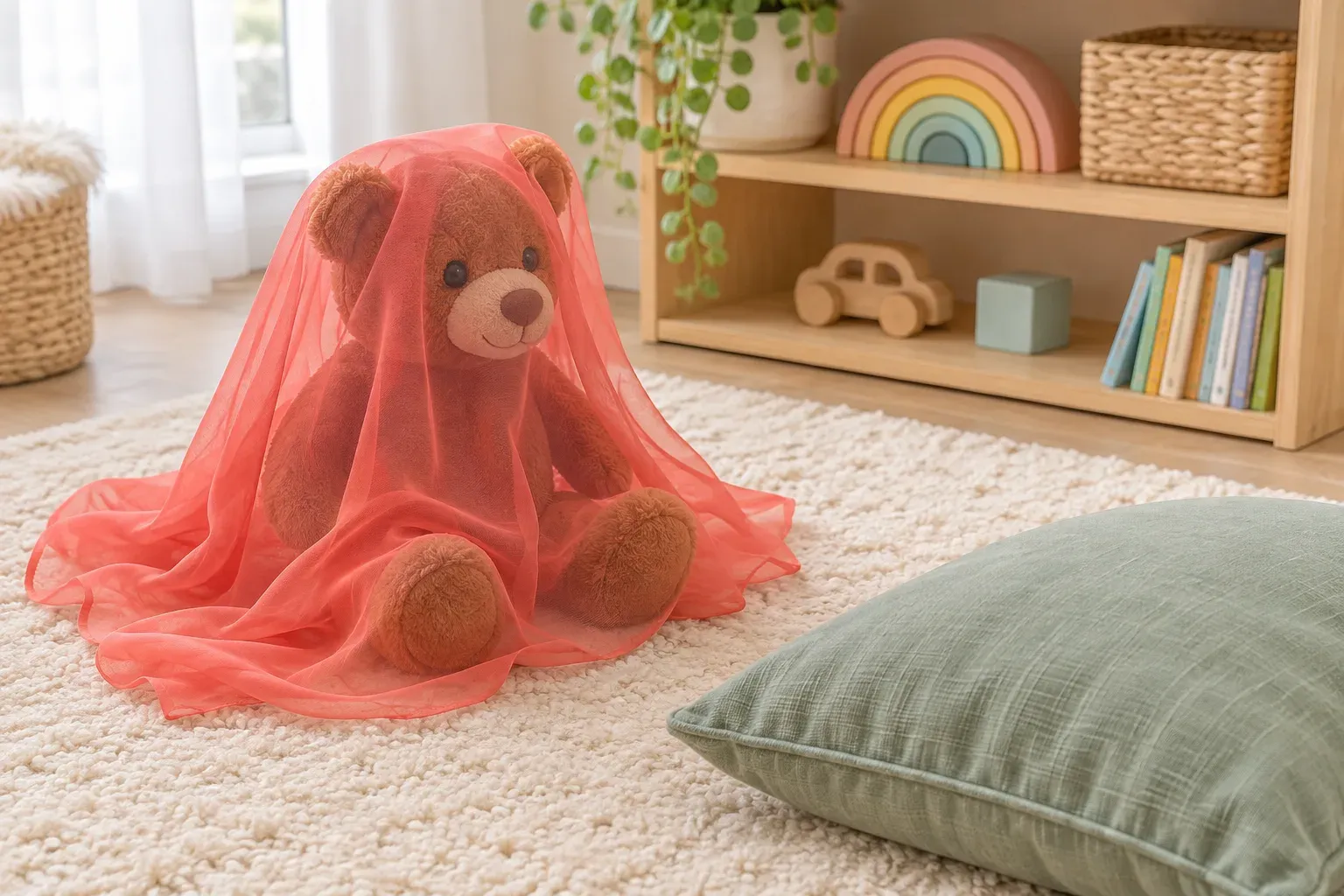 Games Peekaboo with a scarf Hide behind a light scarf and drop it with a smile, or drape it over a head or a toy.
Where to start
- Peekaboo with a scarf
The easiest start with a baby: a thin scarf, your face, and a reveal that somehow gets funnier every single time.
Games - Scarf dancing
Works from one to five, needs only music and a scarf each, and the slow song at the end settles the room again.
Music - Wind and water experiments
Takes scarves outside on a breezy day and adds water and a funnel, so older children can compare what moves fastest.
Water play
Which scarves earn a drawer
Not every scarf works. You want something thin and light, roughly the size of a large handkerchief or a muslin, so it floats when thrown and is too short to wind round a neck. Chiffon squares from a charity shop are ideal, and a pack of play scarves costs very little. Avoid anything with tassels, beads or sequins that a toddler could pick off and swallow. Keep three or four in a cloth bag by the music player and scarf dancing is ready in under a minute, with a peekaboo cloth for the baby.
One rule that never bends
Scarves stay in hands. Say it before you hand them out and say it again the first time someone drapes one round their neck, because someone will. Take it off calmly, without fuss, and give that scarf a short rest if it happens twice. For peekaboo with a one-year-old, you hold the scarf and it goes back in the bag afterwards rather than being left in the cot or the pram. Older children dressing up for a parade can wear one as a belt or tied loosely at the waist, never knotted at the throat.
Same scarf, different ages
A one-year-old mostly wants to pull a scarf off your face and laugh, then pull it off the teddy and laugh again. By three, a scarf becomes a prop: the blue one is the river under the bridge, the red one is the train of a queen's gown in the parade. Four and five year olds will happily hold one up outside to see which way the wind is blowing and how hard. With children of different ages in the room, scarf dancing is the one that suits everyone at once, since nobody can do it wrong.
Parents ask
- Are play scarves safe for babies?
- Thin, breathable ones are fine for supervised games such as peekaboo, with you holding the scarf. Put it away afterwards, and never leave a scarf in a cot or with a sleeping child.
- What can I use if we don't own any light scarves?
- Muslin cloths, tea towels or squares cut from an old sheet or net curtain all float well enough. Trim any fraying edges so there are no long loose threads.
Related lists
With pom-pomsWith a cardboard boxWith tapeWith paintWith chalkWith paperWith blocksWith toy carsWith riceWith play doughWith iceWith stickers