Building
Paper aeroplanes
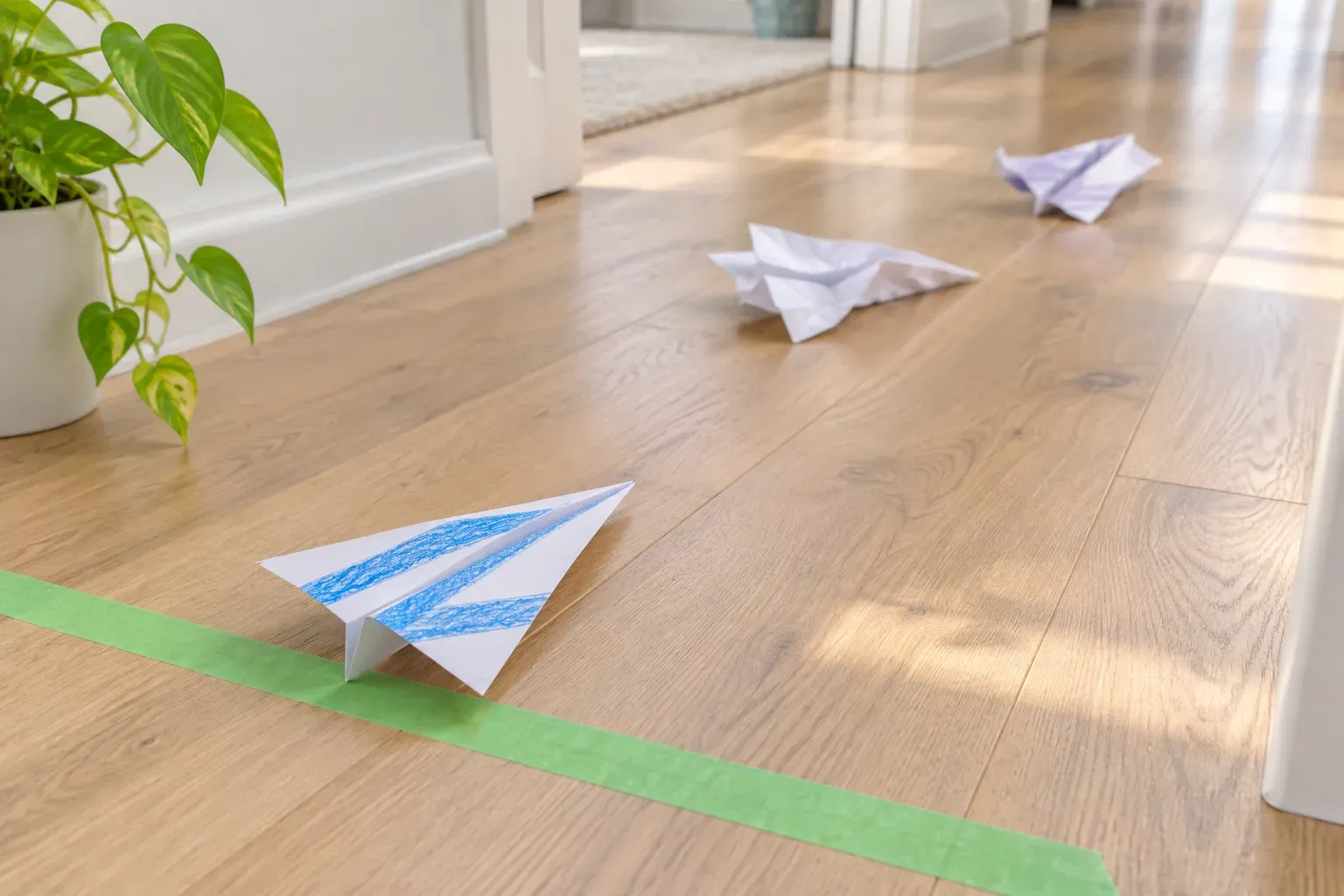
Fold a sheet of A4 into a classic dart, then fly it down the hallway and tweak the wings for distance.
- Age
- 4 to 6 years
- Play time
- 20 min
- Set-up
- 2 min prep
- Where
- Indoors or outdoors
- Who
- Any number of kids
- Clean-up
- Low mess
Six-year-olds tend to believe the first plane will soar across the room, and it usually nose-dives at their feet. That is half the appeal. Folding takes your help at first because the creases need to be sharp and even, but the flying, crashing and refolding can fill a long rainy afternoon. A hallway, or a park on a still day, works best. Expect a pile of crumpled failures before one flies properly, and keep a stack of paper handy.
Paper aeroplanes are paper airplanes in the US, and this classic shape is often called a dart.
How to play
-
Take a sheet of A4 paper, fold it in half lengthways, crease it hard and open it out again so there is a centre line.
-
Fold the two top corners in to meet on the centre line, making a pointed roof. Then fold each new slanted edge in to the centre line again for a sharper nose.
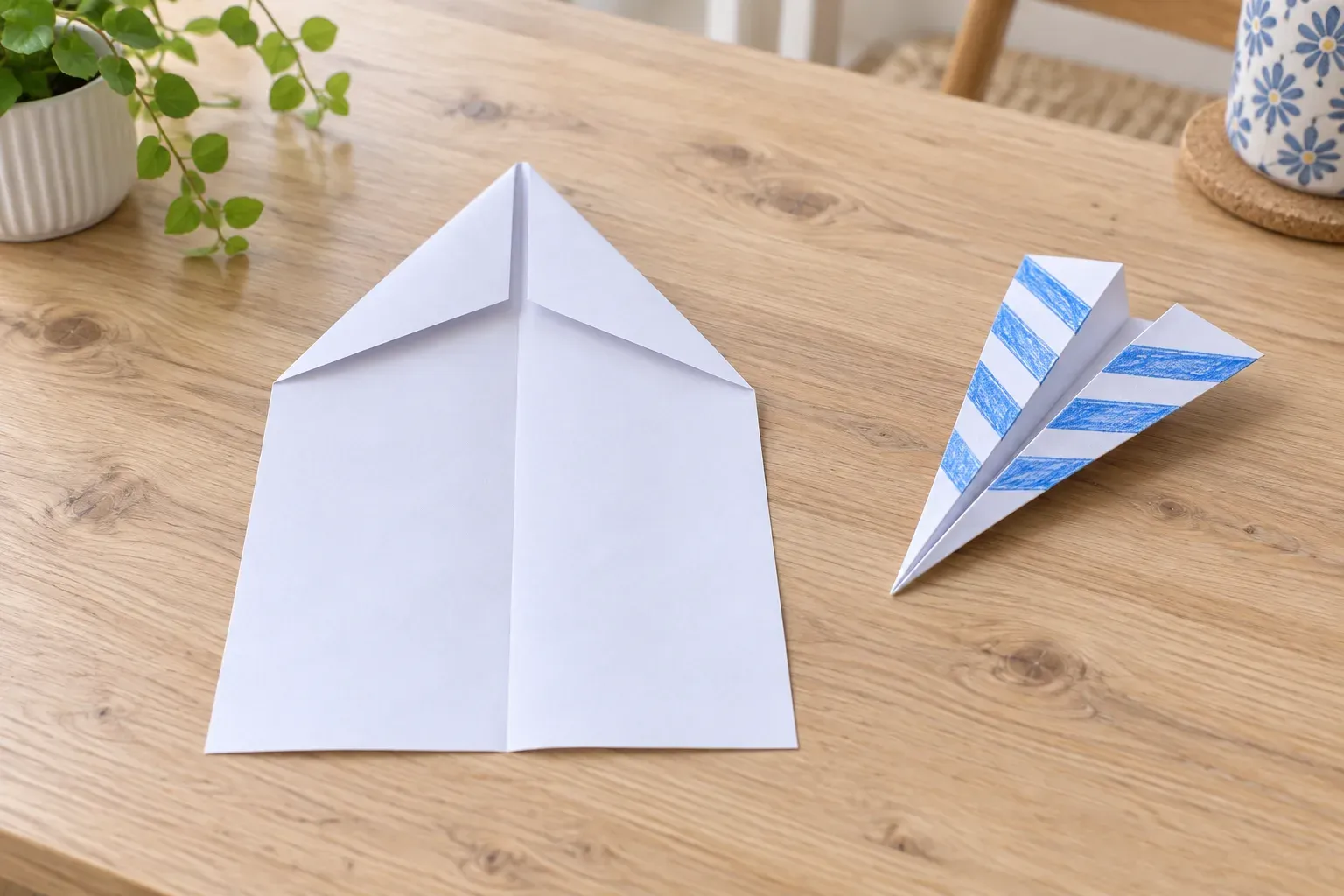
Fold both top corners in to the centre crease -
Fold the whole thing in half along the centre line with the folds on the outside, then fold each side down level with the bottom edge to make the wings.
-
Let your child decorate the wings with crayons, then show them how to hold it underneath near the nose and push it forward gently and level, rather than throwing hard.
-
Mark a start line with masking tape and see how far each flight goes, adding a small tape mark where it lands.
-
Once they have the hang of it, bend up the back edges of the wings a few millimetres and watch it climb, or fold a second plane with wider wings and compare.
What you need
- A4 paper
- crayons or felt pens
- masking tape
Don't have it?
- No A4 paper? Any rectangle of printer paper or a page from an old magazine folds well, though very glossy pages slip.
Stay close
Aim planes away from faces, and fly pointed noses in open space rather than at a younger sibling.
What they are practising
- fine motor. Lining up corners and running a thumbnail along each crease asks for careful, steady pressure.
- problem solving. Changing one fold and watching whether the next flight goes further is trial and error they can see.
Make it easier
For a four-year-old, do the folding yourself while they press each crease flat with a thumb, and keep the wings wide so the plane glides slowly.
Make it harder
A six-year-old can try folding alone with your finished plane as a model, then change one thing at a time and say which version flew further.
Parents ask
- Why does it keep diving straight into the floor?
- Usually the nose is too heavy or it is being thrown too hard. Bend the back edges of both wings up slightly and launch it with a gentle, level push.
- Can my four-year-old and a nine-year-old cousin do this together?
- Yes, and the older one can be the folding expert. Give the younger one the decorating, the tape marks and the job of calling out the winner.
- What if they get frustrated when it crashes?
- Score points for the funniest landing so a crash is part of the game. A fresh sheet costs nothing, so start again rather than fixing a crumpled one.
Find more like this
4 year olds5 year oldsIndoorsOutdoorsLow messBuildingWith tapeWith paper