Big movement
Hopscotch
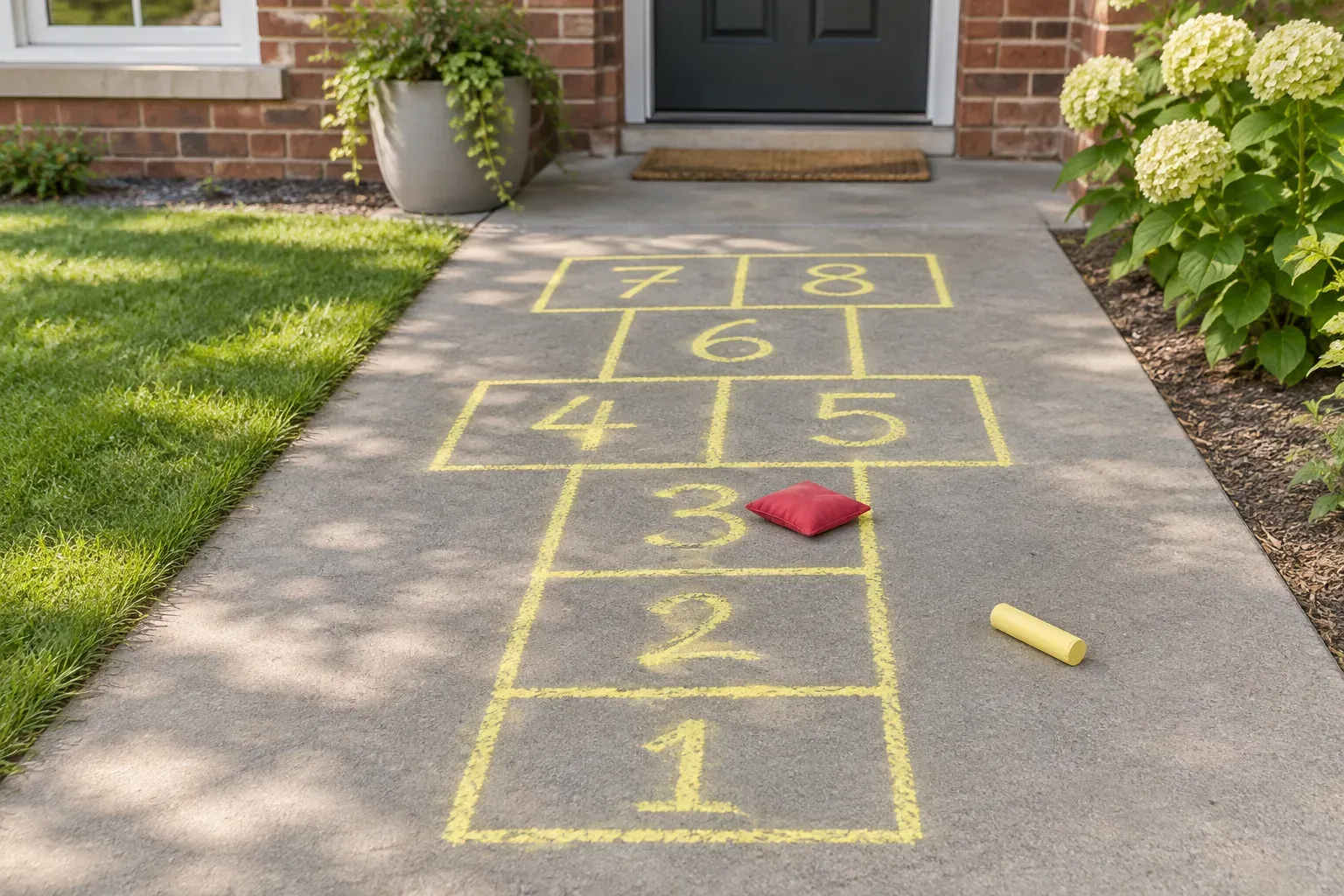
Chalk a numbered grid of squares on the ground, toss a beanbag onto one, then hop and jump along to fetch it.
- Age
- 3 to 6 years
- Play time
- 20 min
- Set-up
- 5 min prep
- Where
- Outdoors
- Who
- Any number of kids
- Clean-up
- Low mess
Most adults remember the rules wrong, and nobody minds. What matters is a chalk grid on the footpath, a beanbag and someone who wants to hop. Three-year-olds usually jump with two feet everywhere and wobble wildly on the single squares; by five, many can manage the whole course on one leg and will tell you so. It fills a dry afternoon in the front yard for the price of a stick of chalk. Expect a lot of throws to land in the wrong square.
In the US you would draw it on the sidewalk with sidewalk chalk.
How to play
-
On a flat paved area away from the road, chalk a column of squares about 40 centimetres across: 1, 2 and 3 single, 4 and 5 side by side, 6 single, then 7 and 8 side by side. Write a big number in each.
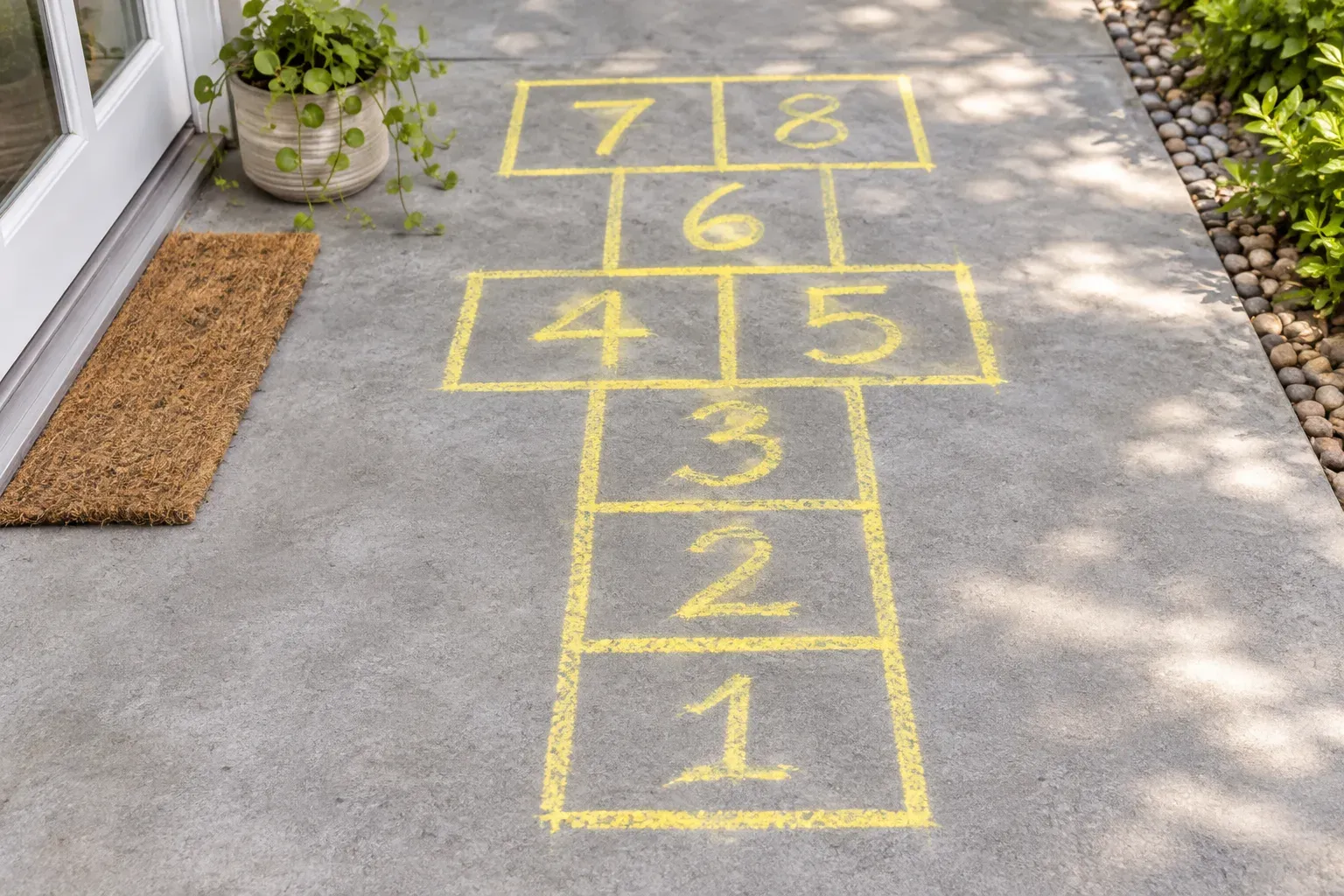
Single, single, single, pair, single, pair. -
Show your child how to stand behind square 1 and toss the beanbag into it.
-
Hop on one foot into the single squares and land with both feet in the pairs, skipping the square with the beanbag in it. At the top, turn round with a jump and come back the same way.
-
On the way back, stop in the square before the beanbag, pick it up, and hop through to the start. Next turn, aim for square 2, and so on up the grid.
-
Treat a beanbag that misses, or a foot on a line, as the end of that turn if your child enjoys rules. If not, let it slide.
-
Hose the chalk away afterwards or leave it for the rain.
What you need
- chalk
- beanbag
- flat paved area
Don't have it?
- No beanbag? A sock rolled into a tight ball lands without bouncing.
- No chalk or no paving? Lay out squares with masking tape on a hard floor indoors.
Stay close
Draw the grid well away from driveways and roads, and stay outside with your child while they play.
What they are practising
- gross motor. Hopping on one foot, landing on two and turning at the top ask for balance and quick changes of rhythm.
- counting. Following the numbers up and back, and aiming for the next square each turn, means finding numerals in order.
- turn taking. With two players, one waits and watches while the other works through the grid.
Make it easier
For a three-year-old, let them jump with both feet in every square and skip the throwing, or place the beanbag for them.
Make it harder
Six-year-olds can try hopping the whole grid on their weaker leg, or picking up the beanbag while balancing on one foot without touching a line.
Parents ask
- My child cannot hop on one foot yet. Can they still play?
- Yes. Jumping with both feet through every square is a perfectly good version, and hopping tends to turn up with practice.
- Does it work on grass?
- Not really, as chalk does not show on grass. Lay skipping ropes out as squares instead, or scratch lines into bare dirt with a stick.
- How do we stop arguments about lines?
- Decide before you start whether touching a line counts, and make the person waiting their turn the line judge.
Find more like this
3 year olds4 year olds5 year oldsOutdoorsLow messBig movementWith chalk